
A suspension clevis eye fitting connects an insulator string to a tower arm or to another fitting in a transmission line. To specify one correctly, you need five numbers: the specified mechanical load (SML), pin diameter, eye or clevis opening, zinc coating thickness and material grade. This guide explains each one and how to match them to your line design.
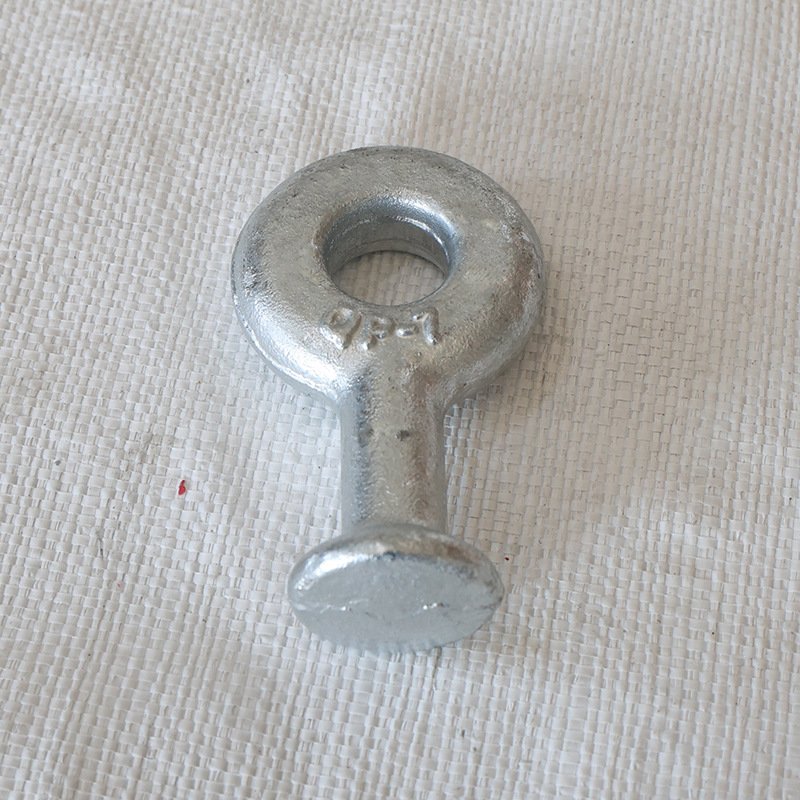
What is a suspension clevis eye fitting?
A suspension clevis eye fitting is a forged steel connector with a clevis (U-shaped fork) at one end and an eye (closed loop) at the other. The clevis takes a pin, and the eye takes a pin, shackle or another fitting. It carries the full mechanical load of the conductor and insulator string.
It sits in the load path between the tower and the insulator string, so a failure here can drop the conductor. Specifications are therefore load-driven, not appearance-driven.
Two common forms:
- Clevis-eye (Y-type): a clevis on one side and an eye on the other, used to link a clevis-end fitting to an eye-end fitting.
- Ball-eye / socket-clevis variants: used where the insulator end fitting is a ball or socket. Ball and socket dimensions follow IEC 60120. Confirm the coupling size before ordering.
For a full overview of tower hardware categories, see our guide to high voltage transmission tower hardware fittings.
What are the key specifications to check?
Check these parameters in order: mechanical rating, dimensions, material, coating and locking method. Each one is a pass/fail item in your bid review.
Specified mechanical load (SML)
SML is the rated failing load in kN. It must exceed the maximum working load by your line’s safety factor, which is set by the line design standard or utility specification.
Typical load classes for clevis and eye fittings in transmission lines are 70, 100, 120, 160, 210 and 300 kN. The rating must match, or exceed, the rating of the insulator string it connects to. Never pair a 160 kN insulator with a 100 kN fitting.
Also confirm whether your supplier states SML (failing load) or working load limit (WLL). They are not the same number, and mixing them up is a common source of undersized orders.
Dimensions
Dimensions must match the mating parts exactly. The ones that matter:
| Parameter | What it controls | How to confirm |
|---|---|---|
| Pin diameter (mm) | Fit with the clevis pin or shackle bolt | Match to mating fitting drawing |
| Clevis opening / width (mm) | Fit with the tongue of the mating fitting | Match to mating fitting drawing |
| Eye inner diameter (mm) | Fit with the pin or shackle on the eye side | Match to mating fitting drawing |
| Overall length (mm) | String length and sag calculation | Match to string assembly drawing |
| Weight (kg) | Tower loading, shipping cost | Datasheet |
[Insert your product table here: model, SML (kN), pin diameter, clevis width, eye diameter, length, weight, from your catalog.]
If you do not have a drawing, send us the mating fitting model and we will confirm the correct size.
Material and manufacturing method
Load-bearing clevis and eye fittings should be forged from carbon or alloy structural steel, not cast. Forging aligns the grain flow along the load path, which gives better strength and impact resistance than casting at the same size.
State the material grade on your purchase order [e.g. steel grade used by your factory, with the applicable standard]. Ask for the mill certificate for the raw material and the heat-treatment record if the part is quenched and tempered.
Hot-dip galvanizing
Steel fittings are hot-dip galvanized for corrosion protection. ISO 1461 is the common reference standard. For steel thicker than 6 mm, it sets a minimum average zinc coating of 85 µm.
Check these points in your specification:
- Average coating thickness in µm, not just “hot-dip galvanized”
- Adhesion and appearance requirements (no bare spots, no heavy zinc lumps in threaded or pin areas)
- Whether the coating is measured by magnetic gauge on each batch
For harsher environments such as coastal or heavily polluted areas, ask for a higher coating thickness and state it in the order.
Locking devices
The pin needs a locking device so it cannot back out under vibration. Common options are split pins (cotter pins) and R-clips. Specify the material (stainless steel is common) and the size. Locking device requirements for ball-and-socket couplings are covered in IEC 60372.
Which standards apply?
Fittings for overhead lines are usually specified against IEC 61284 (requirements and tests for overhead line fittings), with ISO 1461 for galvanizing and IEC 60120 for ball and socket couplings where relevant. Some utilities also apply their own national or company standards.
How do you choose the right size?
Start with the string, not the fitting. Work through these steps:
- Find the maximum working load on the string from the line design (conductor weight, wind, ice, safety factor).
- Select the SML class above that load, then match it to the insulator rating.
- Check the mating parts: tower bracket, insulator end fitting, shackle or yoke plate. Pin diameter and clevis width must match.
- Confirm the string length with the full assembly, so sag and clearances still work.
- Choose the environment spec: standard or heavy galvanizing, stainless locking parts if needed.
The fitting is one part of the string. If you also source insulators, our transmission line insulator string assembly set page shows how the full string is matched.
What do you need to send to get a quote?
To quote accurately, we need: model or drawing, SML (kN), quantity, galvanizing requirement, applicable standard and destination port. With these we can give you a price and lead time.
Next step: Send us your drawing or model number and our engineers will confirm the specification and send a datasheet within [X] working days.
Frequently asked questions
What is the difference between SML and working load for a clevis eye fitting?
SML is the load at which the fitting is rated to fail. Working load is the maximum load allowed in service, and it is lower than SML by a safety factor. Always compare SML to SML, and confirm which one your supplier is quoting.
Should a suspension clevis eye fitting be forged or cast?
Forged is preferred for load-bearing line fittings. Forging gives a continuous grain flow along the load path, which improves strength and toughness compared with casting at the same size.
How thick should the galvanizing be on a clevis eye fitting?
Under ISO 1461, steel thicker than 6 mm requires a minimum average zinc coating of 85 µm. Coastal or heavily polluted sites may need thicker coatings, which should be written into the purchase order.
Can I mix a fitting and an insulator with different strength ratings?
No. The fitting’s SML must equal or exceed the SML of the insulator it connects to, otherwise the fitting becomes the weakest link in the string.
What documents should a supplier provide with the order?
Ask for type test reports, the raw-material mill certificate, galvanizing thickness records and a dimensional drawing. These let you verify the product against your specification.
What information do you need to confirm a clevis eye fitting size?
Send the mating fitting model or drawing, the required SML in kN, and the galvanizing requirement. If you only have the insulator type, we can work out the correct end fitting from it.