
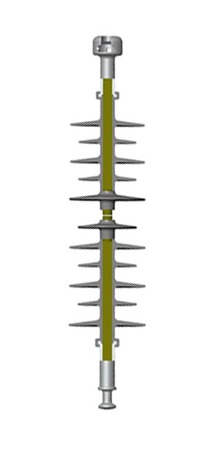
Long rod composite insulators are widely used in modern transmission and distribution line projects. For B2B buyers, EPC contractors, utilities, power grid companies, distributors, and maintenance teams, the sourcing task is not only to compare voltage class or unit price. The real need is to match the insulator with line voltage, mechanical load, creepage distance, pollution level, end fitting type, FRP core strength, silicone rubber housing, packaging requirements, and delivery schedule.
In many overhead line projects, long rod composite insulators are selected because they are lightweight, easy to transport, and suitable for outdoor operating environments. However, the product should not be selected only by catalog appearance. A long rod composite insulator may look similar to another model, but the wrong end fitting, insufficient creepage distance, unsuitable mechanical load, or unclear sealing design can create installation problems and long-term reliability risks.
A practical sourcing decision should start with the application, then move to technical matching, quality risk control, supplier evaluation, and project delivery planning.
Why Long Rod Composite Insulators Matter in Overhead Line Projects
Long rod composite insulators are designed to provide electrical insulation and mechanical support in overhead power line systems. They usually consist of an FRP core, silicone rubber housing, weather sheds, metal end fittings, and sealing areas between the housing and fittings.
Compared with traditional porcelain or glass insulator strings, long rod composite insulators are often lighter and easier to handle during installation. They can reduce transportation weight, simplify line construction, and support different project requirements in transmission and distribution networks.
Buyers usually search for long rod composite insulators when they are working on a new transmission line, distribution line upgrade, power grid maintenance replacement, railway electrification project, or export supply order. In these cases, a small mismatch can cause a large delay. A wrong ball socket size, unsuitable tongue clevis width, unclear rod diameter, insufficient creepage distance, or weak packaging can affect installation and increase replacement cost.
The safer approach is to confirm the long rod composite insulator as part of the complete line assembly. Buyers should check voltage class, rated mechanical load, creepage distance, arcing distance, end fitting interface, FRP core, silicone rubber housing, corona ring requirement, and site conditions before placing an order.
Main Applications of Long Rod Composite Insulators
Long rod composite insulators are commonly used in overhead transmission and distribution lines. Their specific design depends on voltage level, installation position, conductor tension, pollution level, and connected hardware.
Transmission Line Projects
In transmission line projects, long rod composite insulators are often used for suspension or tension applications. Buyers searching for high voltage long rod composite insulators should confirm more than the voltage rating. The insulator must match the line design, mechanical load, creepage distance, arcing distance, end fitting type, and environmental conditions.
For high voltage applications, corona ring design may also need to be reviewed. The size, installation position, and compatibility of corona rings should be checked according to project requirements.
Distribution Line Projects
In distribution line projects, long rod composite insulators may be used where lightweight insulation and reliable outdoor performance are required. Buyers should confirm voltage class, mechanical rating, length, shed profile, and connection method.
Distribution projects may involve different installation environments, including rural lines, urban networks, industrial areas, or coastal regions. The pollution level and local climate should be considered before confirming the creepage distance and housing design.
Maintenance and Replacement Projects
For maintenance replacement, buyers should be especially careful with dimensions and connection interfaces. The existing insulator, tower hardware, crossarm connection, and line fitting should be reviewed before ordering.
Photos of the old insulator, nameplate information if available, key dimensions, and connected hardware details can help the supplier confirm a suitable replacement model. This is especially important when the original drawing is not available.
Key Components of a Long Rod Composite Insulator
A long rod composite insulator is not a single-material product. Its performance depends on the cooperation of the FRP core, silicone rubber housing, end fittings, and sealing structure.
FRP Core
The FRP core is the main load-bearing part of the insulator. It transfers mechanical stress between the two end fittings and supports the line load. Buyers should confirm rod diameter, tensile strength, material consistency, and compatibility with the crimping process.
If the FRP core quality is unstable, the finished insulator may face hidden mechanical risks. For high load projects, the FRP core should be reviewed together with the required specified mechanical load.
Silicone Rubber Housing
The silicone rubber housing provides external insulation and weather protection. It includes the sheath and sheds that help increase creepage distance and improve outdoor performance.
Buyers should confirm housing material, shed design, surface quality, hydrophobic performance expectations, and resistance to outdoor aging. For polluted, humid, coastal, or industrial areas, the external insulation design should be reviewed more carefully.
Metal End Fittings
End fittings connect the long rod composite insulator to the line hardware. Common end fitting types include ball socket, tongue clevis, Y clevis, eye end, and other customized connections.
The fitting type, dimensions, material, galvanizing, and crimping quality should match the project requirement. Load class alone is not enough. A 120kN long rod composite insulator with the wrong connection interface may still be unusable on site.
Sealing Structure
The sealing area between the silicone rubber housing and metal end fittings is important for long-term reliability. Poor sealing may allow moisture or contaminants to affect the internal structure over time.
Buyers should confirm whether the supplier controls sealing quality during production and inspection. For important projects, sealing design and production consistency should be part of the technical discussion.
How to Choose Long Rod Composite Insulators
The key question is not “which long rod insulator is common?” but “which long rod composite insulator matches this line project?” Selection should be based on voltage class, mechanical load, creepage distance, installation type, end fitting interface, and operating environment.
Voltage class is only the starting point. Buyers should also review creepage distance, arcing distance, shed profile, pollution level, and line design. A clean inland project may not require the same creepage distance as a coastal or industrial project.
Mechanical load should also be reviewed carefully. Terms such as 70kN, 100kN, 120kN, 160kN, and 210kN are useful, but they are not complete specifications. Load class should be checked together with conductor tension, line angle, tower design, safety factor, and connected hardware.
For faster quotation and fewer errors, buyers should send drawings, voltage class, rated mechanical load, creepage distance, arcing distance if required, end fitting type, quantity, application, destination country, packaging requirement, and expected delivery schedule.
Quality Risks in Low-Grade or Mismatched Long Rod Composite Insulators
Quality problems in long rod composite insulators often appear during installation, shipment, storage, or long-term outdoor operation. One common issue is dimensional mismatch. Ball size, socket design, clevis width, hole diameter, pin size, and overall length can all affect site installation.
Another concern is insufficient creepage distance. If the insulator is used in a polluted or humid environment, the wrong external insulation design may increase performance risk. Buyers should confirm creepage distance according to project conditions instead of selecting only by voltage class.
Sealing and crimping quality are also important. The connection between FRP core, end fitting, and silicone rubber housing should be stable and properly controlled. Poor process control may create hidden mechanical or insulation risks.
Packaging should not be ignored. Long rod composite insulators are lighter than porcelain insulator strings, but their sheds and fittings still need protection during transport. Buyers should confirm carton, pallet, wooden case, marking, moisture protection, and loading method before shipment.
What Buyers Should Confirm Before Ordering
A complete inquiry helps a long rod composite insulator supplier provide a more accurate quotation. Buyers should first define whether the product is for a transmission line, distribution line, railway electrification project, maintenance replacement, or new construction.
The technical information should include insulator type, voltage class, rated mechanical load, creepage distance, arcing distance, end fitting type, drawing, sample photo if available, material requirement, quantity, and installation environment.
Commercial information also matters. Destination country, packaging requirement, shipping method, inspection document, certificate requirement, marking requirement, and expected delivery schedule can affect quotation and production planning.
For replacement projects, buyers should provide photos of the existing insulator and connected hardware. If possible, overall length, fitting dimensions, ball size, clevis width, hole diameter, and nameplate information should also be shared.
Testing and Inspection Points Buyers May Request
Testing and inspection requirements should be confirmed according to project needs. Buyers may request dimension checks, visual inspection, mechanical load confirmation, galvanizing review, packing inspection, and document confirmation before shipment.
For some projects, type test reports, routine test reports, material information, or third-party inspection may be required. These requirements should be discussed before production because they may affect lead time, cost, and documentation preparation.
The purpose of inspection is simple: the delivered long rod composite insulators should match the agreed drawing, specification, packing requirement, and delivery schedule.
How to Evaluate a Long Rod Composite Insulator Supplier
A suitable long rod composite insulator supplier should offer more than a product list. Buyers should evaluate whether the supplier can support technical communication, drawing confirmation, product matching, quality checks, packaging planning, and export coordination.
Product coverage is important for project buyers. A supplier that can provide long rod composite insulators, suspension composite insulators, line post insulators, pin type insulators, station post insulators, end fittings, FRP rods, corona rings, and related power line hardware can simplify sourcing for power grid projects.
Technical communication before production is also critical. A capable supplier should help confirm voltage class, mechanical load, creepage distance, end fitting compatibility, housing design, surface treatment, packaging, and documents before the order moves forward.
Buyers should also consider whether the supplier can support OEM or custom requirements. For project-based sourcing, drawings, reference models, load class, and installation details should be shared early.
Why Source Long Rod Composite Insulators with Related Line Hardware
Sourcing long rod composite insulators together with related line hardware can reduce compatibility risk when drawings and specifications are confirmed as a complete assembly. This is useful for buyers working with suspension strings, tension strings, tower hardware, corona rings, and other overhead line accessories.
When insulators and hardware are purchased from separate suppliers, the buyer must manage the connection interface carefully. Coordinated sourcing can make it easier to review end fitting type, mechanical load, dimensions, surface treatment, packaging, and shipment plan.
This approach may also support better total procurement cost control. Instead of sending several separate inquiries, buyers can combine drawings, quantities, and application requirements in one technical discussion.
Why CECI Is a Practical Supplier Option for Long Rod Composite Insulators
Buyers comparing China long rod composite insulator supplier options should consider whether the supplier can support both insulator products and related power grid components. CECI presents a product range under High Voltage Insulators and Power Grid Hardware, including polymer composite insulators, long rod composite insulators, silicone rubber insulators, overhead line hardware fittings, end fittings, FRP rods for insulators, surge arresters, fuse cutouts, glass insulators, and related power grid products.
For this sourcing topic, the most relevant category is long rod composite insulators and related end fittings. Buyers may also review FRP rods, corona rings, and overhead line hardware when the project requires complete assembly matching.
CECI can also be considered when buyers need custom designs or project-based communication. Buyers should still confirm voltage class, mechanical load, creepage distance, end fitting type, material, surface treatment, inspection requirements, packaging, and delivery expectations before placing an order.
A practical next step is to send insulator type, drawing, voltage class, load requirement, creepage distance, fitting type, quantity, application, destination country, and delivery expectation for quotation and technical confirmation.
Conclusion
Long rod composite insulators should be sourced according to real transmission and distribution project requirements. The right product must match voltage class, mechanical load, creepage distance, end fitting interface, silicone rubber housing design, FRP core requirement, installation position, and operating environment.
For EPC contractors, utilities, distributors, equipment manufacturers, and maintenance teams, the most useful supplier is one that can discuss technical details clearly, support product matching, and coordinate related power grid components. A clear inquiry with drawings, sample photos, voltage class, load class, material requirements, quantity, application, packaging needs, and delivery schedule can reduce risk and improve quotation accuracy.
FAQs
Q1: What is a long rod composite insulator?
A long rod composite insulator is an outdoor power line insulator made with an FRP core, silicone rubber housing, weather sheds, and metal end fittings. It is commonly used in transmission and distribution line projects.
Q2: How do I choose the right long rod composite insulator?
Start with voltage class, mechanical load, creepage distance, installation type, end fitting interface, and operating environment. Drawings and connected hardware details should be confirmed before ordering.
Q3: Why is creepage distance important for long rod composite insulators?
Creepage distance affects external insulation performance, especially in polluted, humid, coastal, or industrial environments. It should be selected according to project conditions and technical requirements.
Q4: What end fittings are used for long rod composite insulators?
Common end fittings include ball socket, tongue clevis, Y clevis, eye end, and customized fittings. The final choice depends on the line hardware and project drawing.
Q5: What information should I send to a long rod composite insulator supplier?
Send the insulator type, voltage class, mechanical load, creepage distance, drawing, end fitting type, material requirement, quantity, application, destination country, packaging requirement, and expected delivery schedule.
Q6: Can long rod composite insulators be customized?
Yes. Customization may include length, creepage distance, end fitting type, mechanical load, shed profile, marking, packaging, and documentation. Buyers should provide drawings and project details early.