
what is a glass insulator used for
Glass insulators are protective components used in electrical systems to support and separate energized conductors from poles, towers, brackets, and other grounded structures. Their main job is simple but essential: keep electricity flowing along the intended path while helping prevent leakage, short circuits, and unsafe contact. Although many people recognize old glass utility insulators as collectibles, their original purpose was practical, durable electrical insulation.
What is a glass insulator used for?
A glass insulator is used to hold electrical wires in place while stopping current from passing into the supporting structure around them. In overhead power distribution, communication lines, substations, and other utility applications, these insulators create a physical and electrical barrier between a conductor and the hardware that supports it.
This matters because electricity always seeks a path to ground. Without electrical insulators, a live wire attached directly to a wooden pole, metal crossarm, or tower fitting could lose energy, damage equipment, or create a serious safety hazard. Glass helps resist that unwanted current flow while also standing up to outdoor conditions such as rain, wind, sun exposure, and temperature changes.
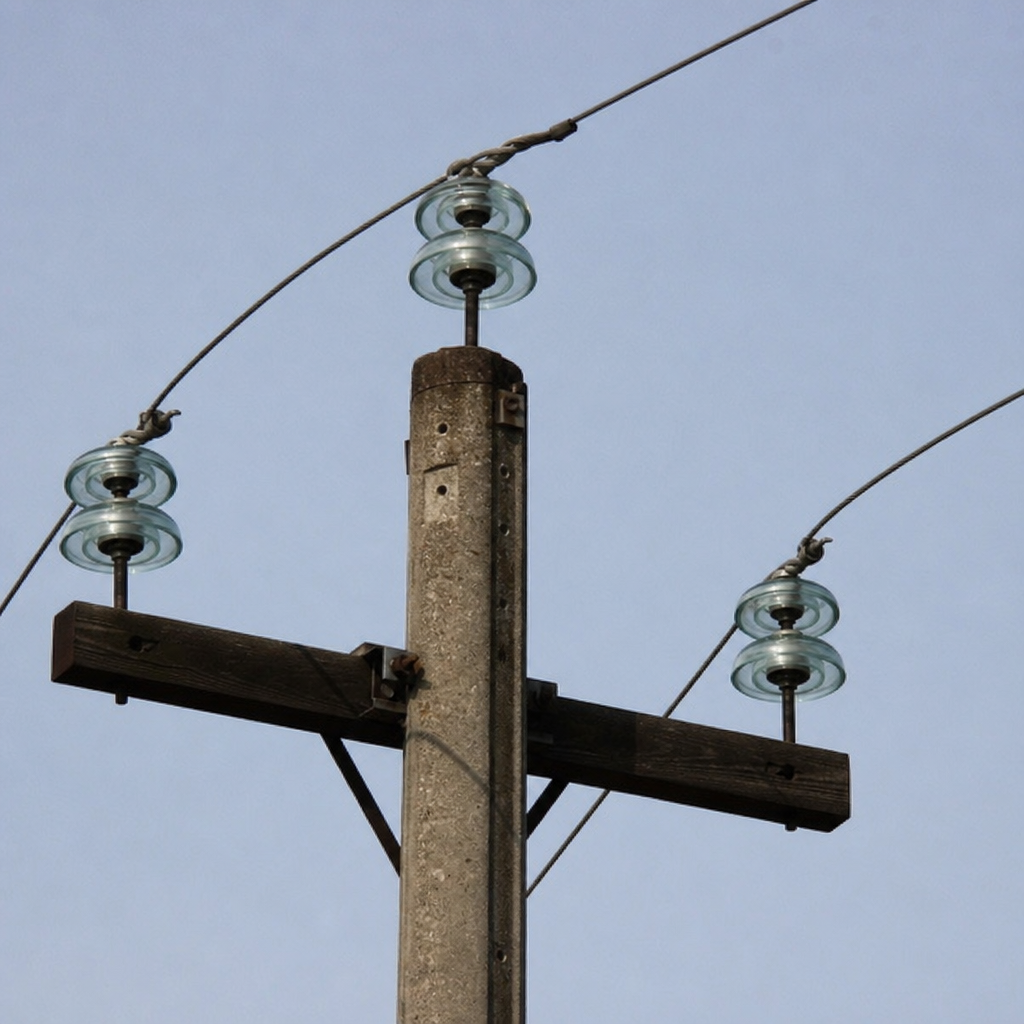
How glass insulators work in an electrical system
Glass insulators work by combining high electrical resistance with a shape designed to manage surface moisture and contamination. The glass body separates the conductor from the mounting hardware, while the curved skirts or ridges increase the distance electricity would need to travel across the surface.
That surface distance is important outdoors. Dust, salt, pollution, or rainwater can create a conductive film on an insulator. By using a ribbed or shed-like design, utility insulators make that surface path longer and more difficult for current to cross. This helps reduce leakage current and flashover risk under normal operating conditions.
In many installations, the insulator is not working alone. It is part of a larger assembly that may include a pin, clamp, crossarm, bracket, conductor tie, or suspension hardware. The insulator supports mechanical load and electrical separation at the same time, which is why material strength and design matter as much as electrical resistance.
Common places glass utility insulators appear
Glass insulators have been used across several types of overhead line systems. Their exact form depends on the voltage level, conductor arrangement, and mechanical requirements of the line.
Common uses include:
- Overhead distribution lines: Glass pin-type insulators can support conductors on poles where power is carried through local distribution networks.
- Transmission and sub-transmission lines: Larger glass disc insulators may be connected in strings to handle higher voltages and heavier mechanical loads.
- Telegraph and telephone lines: Many vintage glass insulators were made for early communication networks before modern cable systems became common.
- Railway and industrial electrical systems: Glass units may be found where overhead conductors or specialized utility infrastructure require insulation.
- Substation equipment: Certain insulator types help support buswork, switches, and other energized parts while maintaining clearance from grounded structures.
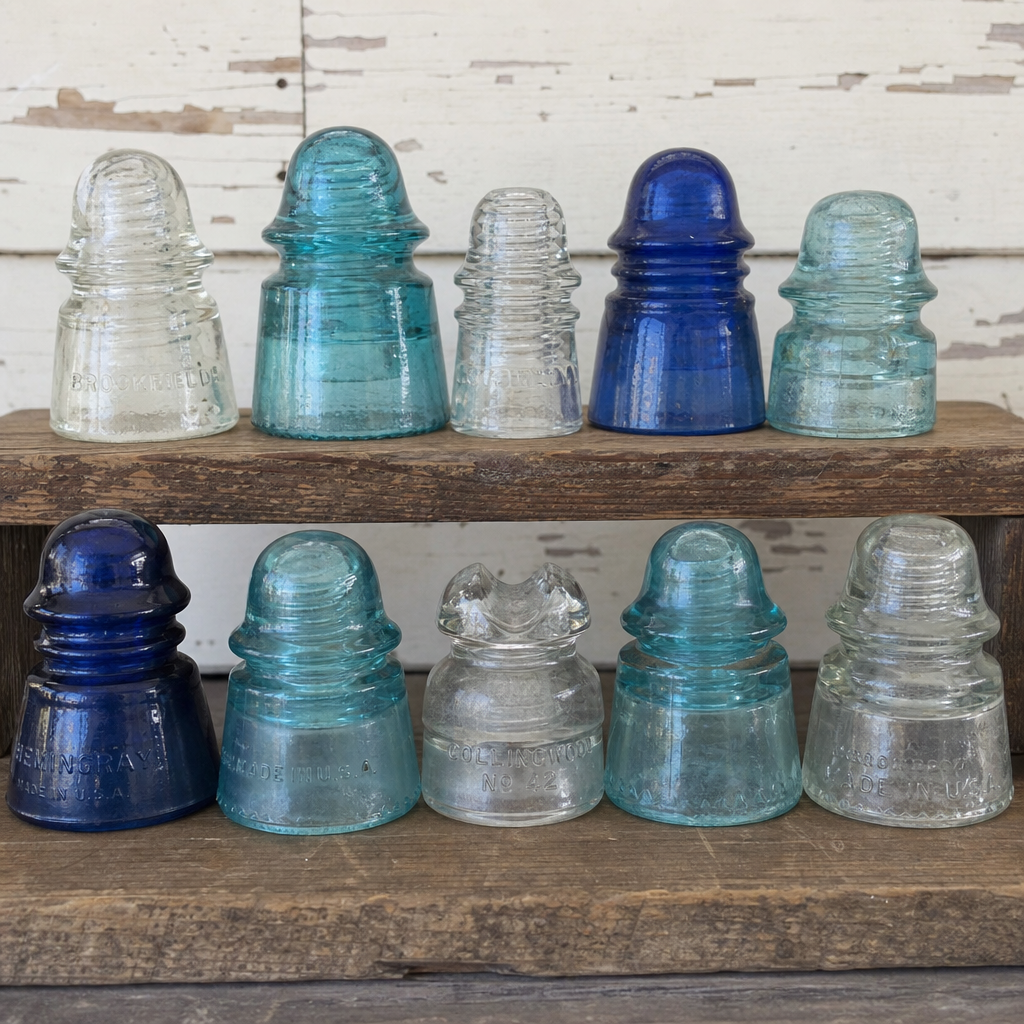
Even when older pieces are no longer in active service, they remain useful for understanding how utility design evolved. Collectors often value glass insulators for their color, markings, age, and manufacturing style, but their design still reflects a clear engineering purpose.
Why was glass chosen as an insulator material?
Glass was chosen because it offers strong electrical resistance, good weather durability, and visible condition monitoring. Unlike some opaque insulator materials, glass can make cracks, internal defects, or damage easier to notice during inspection.
Another advantage is that glass has a hard, smooth surface. This can help shed water and reduce the buildup of grime compared with rougher materials. It also resists many environmental effects that would quickly degrade less suitable materials outdoors.
That said, glass is not the only option. Modern electrical systems use several insulator materials depending on cost, voltage, weight, contamination level, mechanical stress, and maintenance needs. Glass remains one important member of a broader family of electrical insulators.
Glass compared with other insulator materials
Different insulator materials solve the same basic problem in different ways. Choosing one is rarely about a single “best” material; it is about matching the insulator to the environment and electrical duty.
Key comparisons include:
- Glass Glass is rigid, weather-resistant, and visually inspectable. It has long been used for utility insulators, especially in overhead line applications. Its main drawback is brittleness, so impact damage is a concern.
- Porcelain or ceramic Porcelain is another traditional choice for power systems. It is mechanically strong, electrically reliable, and widely used in many insulator types. However, defects may be harder to see from the outside than with clear glass.
- Polymer or composite materials Polymer insulators are often lighter than glass or porcelain. They can perform well in difficult pollution conditions and are common in many modern installations. Their long-term performance depends on material quality, design, and exposure conditions.
- Specialty insulating materials In equipment, panels, and enclosed systems, materials such as rubber, epoxy, plastics, mica, or fiberglass may be used. These are not always shaped like overhead utility insulators, but they serve the same core purpose: keeping electrical energy controlled and separated.
Understanding these insulator materials helps explain why glass is still recognized even as newer options have expanded the choices available to utilities and engineers.
Main insulator types used on utility lines
The term “glass insulator” can describe several designs. Each type is shaped for a particular job, and many are also made from porcelain or polymer materials.
Common insulator types include:
- Pin-type insulators: Mounted on a pin, usually on a crossarm or pole top, and used to support overhead conductors.
- Suspension insulators: Often made as disc units linked together in strings for higher-voltage lines.
- Strain insulators: Used where conductors face pulling tension, such as dead ends, corners, or long spans.
- Shackle or spool insulators: Compact units used in lower-voltage distribution or service applications.
- Post insulators: Rigid supports used in substations, switchyards, and some line applications.
The shape is not decorative. Ridges, skirts, grooves, and mounting points all help manage electrical clearance, water shedding, mechanical stress, and conductor support.
What should you know about old glass insulators?
Old glass insulators were usually made for utility or communication service, but today many are found in antique shops, salvage yards, barns, and private collections. They may be safe as display objects if they are clean and undamaged, but they should not be reused in live electrical work unless evaluated by qualified professionals and rated for the intended application.
Age, appearance, and original purpose do not guarantee safety. A vintage insulator may have cracks, chips, manufacturing flaws, or unknown service history. Modern electrical installations must follow applicable codes, ratings, and utility standards, so decorative reuse should stay decorative.
If you find one, look for details such as embossing, color, skirt shape, and thread design. Those clues can suggest how it was used and what kind of line it may have served. For homeowners and hobbyists, that history is often the most interesting part.
Practical takeaways
If you are trying to understand what is a glass insulator used for, remember these core points:
- It supports electrical conductors while isolating them from grounded structures.
- It helps prevent leakage current, flashover, and unsafe electrical contact.
- It was widely used on overhead power, telegraph, telephone, and utility systems.
- Its shape increases surface distance and improves outdoor performance.
- It belongs to a wider category that includes porcelain, polymer, and other electrical insulators.
- Vintage pieces are interesting collectibles, but they should not be treated as modern rated equipment.
Glass insulators are a reminder that electrical safety often depends on simple-looking parts doing demanding work. Whether mounted on a pole or sitting on a collector’s shelf, a glass insulator represents the same basic idea: electricity must be guided, supported, and kept where it belongs.