
A corona ring controls the electric field at the energized end of a composite insulator. An arcing horn gives a flashover arc a safe path away from the silicone rubber housing. This guide explains how each part works, when you need it, which standards apply, and what to confirm before you order.
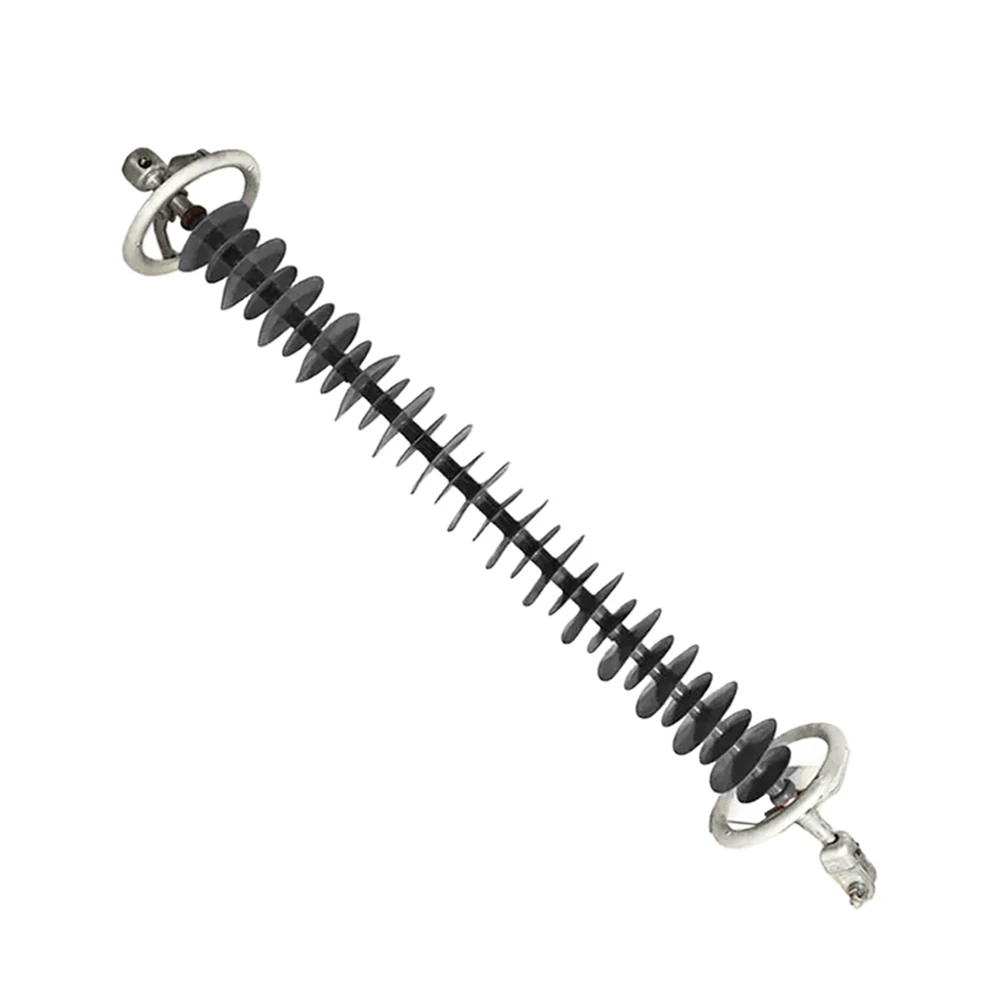
What Do a Corona Ring and Arcing Horn Do on a Composite Insulator?
The corona ring reduces electric field stress near the end fitting to prevent corona discharge. The arcing horn moves the power arc away from the insulator body during flashover. Together they protect the silicone rubber housing from long-term electrical aging and short-term arc damage.
Composite insulators combine a fiberglass core rod, a silicone rubber housing and metal end fittings. Silicone rubber resists pollution well, but it is an organic material. Sustained corona or arc heat can erode it. If you buy from a composite insulator manufacturer and wholesale supplier, the accessories should be designed and tested together with the insulator.
Corona ring function
A corona ring, also called a grading ring, is a smooth metal ring fitted around the end fitting. Its large, rounded surface spreads the electric field and lowers the peak stress where the housing meets the metal. This delivers four results:
- Suppresses corona discharge at the end fitting
- Slows ozone-related aging and loss of hydrophobicity in the rubber
- Lowers radio interference voltage (RIV) and audible noise
- Improves voltage distribution along the insulator near the line end
Arcing horn function
An arcing horn is a pair of metal electrodes, one on each end fitting, that leave an air gap beside the insulator. The gap is set shorter than the insulator’s own arcing distance. When lightning or switching overvoltage causes flashover, the arc forms between the horns, not along the rubber surface or at the core-rod seal. This keeps the insulator serviceable after most flashover events.
How Do You Choose a Corona Ring, an Arcing Horn, or Both?
Choose based on line voltage, altitude, pollution level and your utility’s specification. As a general practice, corona rings are used from about 110 kV upward. At 220 kV and above, a ring at the line end is common, and at 330 kV and above, rings at both ends are common. Always confirm against project drawings and the manufacturer’s electric field calculation.
| Corona ring | Arcing horn | |
|---|---|---|
| Main purpose | Control electric field, stop corona | Divert power arc from the insulator |
| Protects against | Long-term electrical aging | Short-term flashover damage |
| Shape | Smooth closed ring | Rod electrodes forming an air gap |
| Key design factor | Ring diameter, tube diameter, distance from fitting | Gap distance and electrode shape |
| Typical use | About 110 kV and above | Wide range, set by protection philosophy |
Many higher-voltage products use a combined arcing ring that grades the field and forms the arc gap in one part. It reduces weight and installation steps.
Factors that change the specification
- Altitude: thinner air lowers the corona onset voltage, so high-altitude lines may need larger rings.
- Pollution level: heavy pollution raises flashover risk, so the arc gap and horn material need more attention.
- Insulator length and model: ring size and position are matched to a specific insulator design, and a ring made for one voltage class is not a safe substitute for another.
- Corrosion environment: coastal or industrial sites need stainless steel or thicker galvanizing.
Need matched accessories for your line voltage? Send us your voltage class, altitude and pollution level. Our engineers will recommend the ring and horn configuration. Request a technical recommendation
Which Standards and Tests Apply to Corona Rings and Arcing Horns?
Composite insulators are covered by IEC 61109, which sets design, type and acceptance test requirements for insulators on AC overhead lines above 1000 V. Radio interference testing follows IEC 60437. Line fittings, including ring-type accessories, are covered by IEC 61284, which includes corona and RIV tests.
For metal parts, ask for material and coating specifications with numbers. Hot-dip galvanized steel horns should meet ISO 1461. For steel thicker than 6 mm, that standard requires an average zinc coating of at least 85 µm. Aluminum alloy rings should state the alloy grade, and stainless steel parts should state the grade, such as 304.
Request the manufacturer’s electric field simulation or design drawing for the ring position. A ring placed by rule of thumb can leave field peaks in the wrong place.
What Should You Check Before Ordering?
Confirm seven items with the supplier before placing an order: voltage class and insulator model, whether accessories ship with the insulator, arc gap dimension and tolerance, material and coating specification, test reports, packaging, and installation drawings. Missing any of these is the most common cause of delivery disputes and field rework.
- Line voltage and the exact insulator model the accessories fit
- Ring and horn supplied together with insulators, or separately
- Arc gap dimension and its tolerance in mm
- Material grade and coating thickness in µm
- Type test and RIV test reports from an accredited lab
- Packaging that protects rings from deformation in transit
- Installation drawing showing orientation and position
What affects price: material (aluminum alloy vs. stainless steel), ring diameter and tube diameter, galvanizing thickness, surface finish, order quantity and OEM tooling if you need a custom design. Minimum order quantity is 500, standard lead time is 7 weeks, and OEM drawings are accepted.
Ready to quote? Send your drawing or specification and we will reply with a quotation. Get a quote for composite insulators with matched accessories
What Installation Mistakes Should You Avoid?
The most common mistakes are wrong ring orientation, incorrect position relative to the end fitting, loose clamps, changed arc gap, and rings deformed in transport. Each one can defeat the protection the accessory is meant to provide.
- Ring installed upside down or off-center, leaving field peaks at the fitting
- Clamp bolts not tightened, so wind vibration shifts the ring
- Arc gap adjusted on site without checking the design value
- Dented or scratched rings installed anyway, creating local corona points
- Rings left out of the order, so the line end goes into service unprotected
Clear drawings, torque values on the drawing, and protective packaging prevent most of these problems.
FAQ
Is a corona ring the same as a grading ring?
On composite insulators the two terms usually describe the same part. Some specifications reserve “grading ring” for parts whose main job is voltage distribution, but the physical product is very similar.
Do all composite insulators need a corona ring?
No. Lower-voltage lines often do not need one. The requirement depends on voltage class, altitude, pollution level and the utility’s specification. Lines from about 110 kV upward commonly use rings.
What is the difference between a corona ring and an arcing horn?
A corona ring controls the electric field to stop corona and prevent slow aging of the housing. An arcing horn sets a defined air gap so a flashover arc burns between the horns, not on the insulator. They solve different problems and are often used together.
Can a corona ring be added after the insulator is installed?
Only if the insulator design and end fitting allow it and the ring is designed for that specific insulator. Ask the manufacturer to confirm compatibility and position before retrofitting.
Does an arcing horn replace a surge arrester?
No. An arcing horn protects the insulator from arc heat during flashover. A surge arrester limits overvoltage on the line. The two serve different roles and are often used on the same line.