
how are polymers insulators of electricity
Polymer electrical insulators are designed to separate energized conductors from grounded structures, helping equipment operate safely and consistently in demanding environments. This product page presents polymer insulators as practical insulating materials for power, industrial, and equipment applications where low conductivity, durability, and manageable installation matter. If you are comparing options or asking how are polymers insulators of electricity, the answer starts with their molecular structure and ends with better isolation, lighter handling, and dependable insulation performance when properly specified.
Why choose polymer insulators for electrical isolation?
Polymer insulators are chosen because the material resists the movement of electric charge. Unlike metals, most insulating polymers do not have large numbers of free electrons available to carry current, so they help block unwanted electrical flow between two points. In real equipment, that means a polymer component can support, separate, cover, or protect energized parts while reducing the risk of current taking the wrong path.
The product value is not only electrical. Polymer insulators are often lighter than ceramic or glass alternatives, easier to handle on site, and adaptable to complex shapes. That flexibility makes them useful for cable accessories, switchgear components, bushings, spacers, stand-offs, protective covers, and power distribution assemblies where the insulating part must fit the system rather than force the system to fit the part.
Built for dependable insulation performance
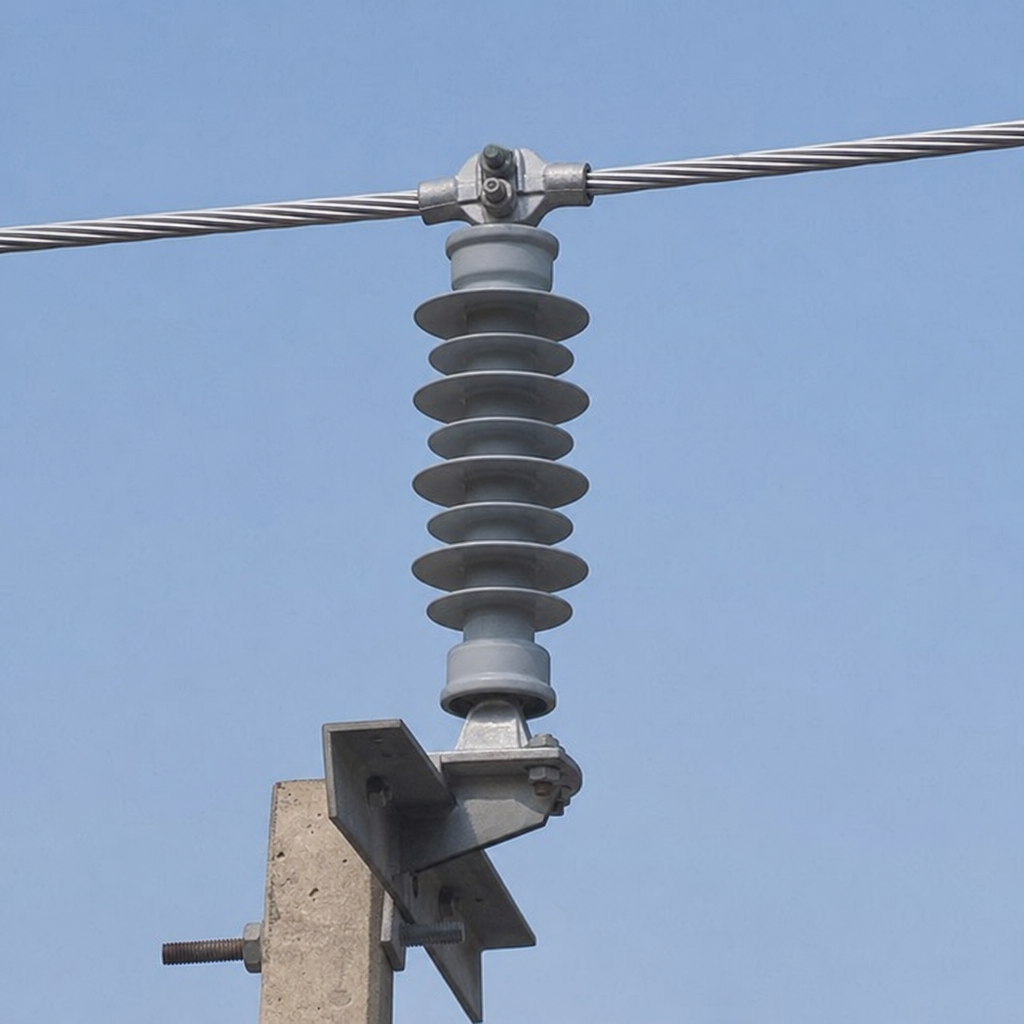
A good insulator does more than “not conduct.” It must maintain separation under voltage stress, environmental exposure, mechanical load, contamination, moisture, and temperature changes. Polymer insulators are engineered to perform this role by combining an electrically resistant base material with a shape and surface design suited to the installation.
In practical terms, the right polymer insulator helps manage three important risks: direct conduction through the material, surface leakage across the outside of the component, and mechanical failure that could reduce electrical clearance. Product selection should consider all three. A part that looks simple can be doing several jobs at once: holding a conductor in place, preserving creepage distance, protecting nearby components, and supporting safer maintenance access.
Key performance benefits include:
- Electrical separation: Helps prevent unwanted current flow between energized and grounded or differently energized components.
- Stable support: Keeps conductors, busbars, or assemblies positioned with the required spacing.
- Surface resistance: Supports reduced leakage current when the material and design are matched to the environment.
- Weight reduction: Makes handling, transport, and installation easier compared with many traditional insulating materials.
- Design flexibility: Can be molded, machined, or formed into application-specific profiles.
- Environmental suitability: Can be specified for indoor, outdoor, clean, contaminated, dry, or moisture-prone conditions depending on material choice.
How polymer insulation works in the field
The insulating behavior of polymers comes from their bonded molecular structure. Electrons are generally held within the polymer chains rather than moving freely through the material. Because charge carriers are limited, the material has high electrical resistance and can act as a barrier between conductive parts.
However, product performance depends on more than the polymer itself. Geometry matters. Thickness, air clearance, creepage distance, ribs, sheds, edges, mounting hardware, and surface finish can all affect how voltage stress is distributed. This is why polymer insulators should be treated as engineered components, not just pieces of plastic.
For example, a busbar support in a compact electrical cabinet may need to hold a conductor securely while maintaining separation from the enclosure and neighboring phases. A polymer stand-off can provide the mechanical height, dielectric separation, and mounting interface in one component. In an outdoor distribution setting, a shed-style polymer insulator may also need to help shed water and reduce surface tracking risk.
Product options and common applications
Polymer insulators can be selected in different forms depending on the system. The best choice is based on voltage requirements, mechanical load, environment, available space, regulatory expectations, and installation method. When these variables are known, the insulator can be specified with confidence rather than selected by appearance alone.
Common product formats include:
- Stand-off insulators for busbars, panels, switchboards, and control cabinets.
- Line and post insulators for supporting conductors in distribution or outdoor electrical systems.
- Bushings for safely passing conductors through grounded barriers or equipment walls.
- Spacers and separators for maintaining distance between phases, terminals, or components.
- Protective covers and barriers for reducing accidental contact and improving equipment organization.
- Custom molded or machined parts for assemblies with special geometry, mounting, or clearance requirements.
Typical applications include power distribution equipment, renewable energy systems, battery and energy storage assemblies, industrial controls, transformers, switchgear, cable management, transportation electrical systems, and OEM electrical products. If your equipment has energized parts that must be supported without creating a conductive path, polymer insulators may be a strong fit.
Features that turn into practical advantages
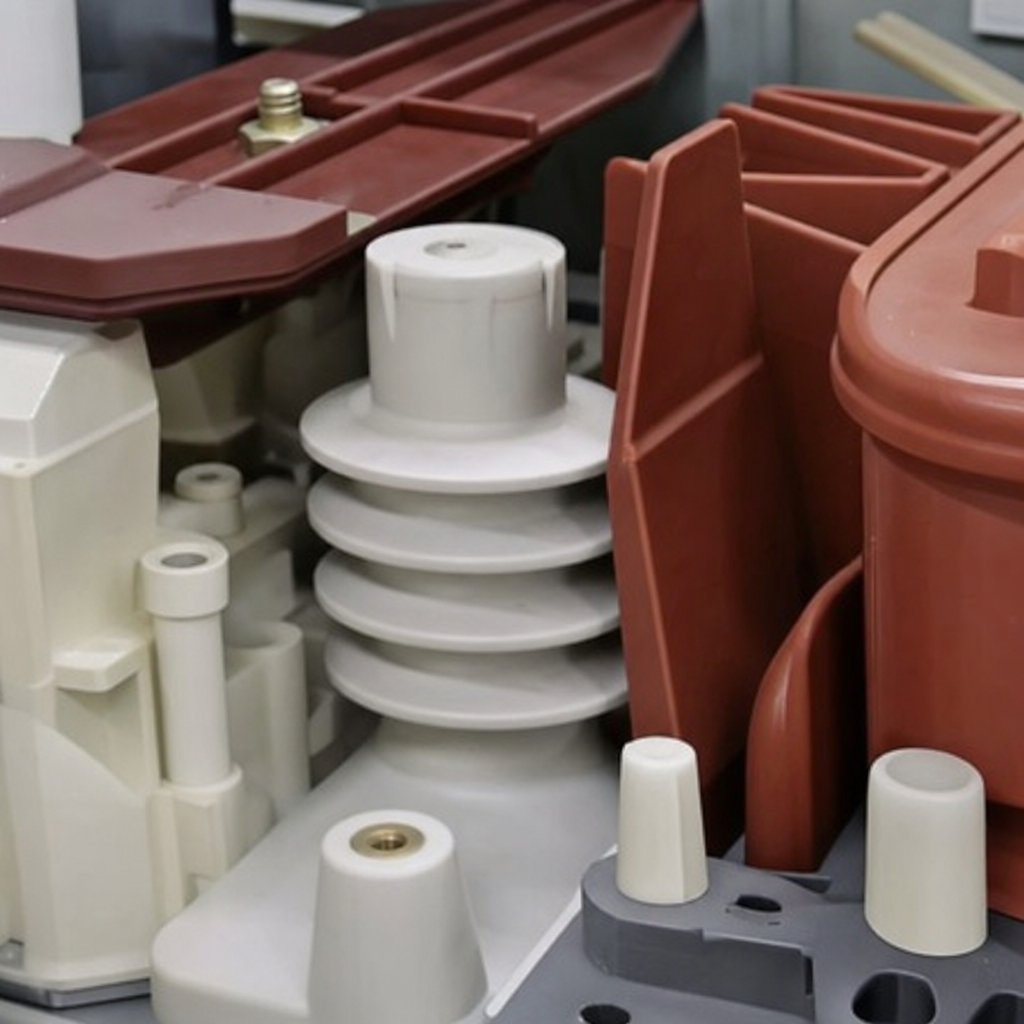
The strongest product choice is the one that matches the real operating conditions. Polymer insulators can be specified to prioritize electrical resistance, mechanical strength, surface tracking resistance, weather exposure, flame behavior, thermal stability, or dimensional fit. Each feature has a practical benefit for engineers, installers, and purchasing teams.
Important feature areas to review:
- Material family: Different polymer compounds offer different balances of dielectric strength, toughness, temperature tolerance, UV resistance, and chemical compatibility.
- Mechanical design: The insulator should support the expected load without cracking, creeping, deforming, or loosening under service conditions.
- Mounting interface: Inserts, threaded ends, flanges, holes, or custom fixtures should match the installation method and maintenance plan.
- Surface profile: Ribs, sheds, and smooth transitions can help manage contamination and moisture on exposed surfaces.
- Dimensional control: Consistent size and fit reduce installation adjustment and support repeatable assembly quality.
- Application-specific compliance: Requirements should be reviewed against the standards, tests, and documentation needed for the final equipment or project.
This is where polymer insulators often stand out. They can be tailored to the electrical and mechanical job instead of forcing a standard shape into a difficult space. That can simplify layouts, reduce assembly weight, and make future servicing more straightforward.
Specifications to define before ordering
Because no single polymer insulator is right for every installation, the specification process should begin with the operating environment and electrical duty. Providing clear requirements helps ensure the supplied component has the right insulation performance for the equipment.
Before requesting a quote, prepare the following information:
- Application type: Busbar support, line support, bushing, spacer, barrier, cover, or custom part.
- Electrical conditions: System voltage, impulse requirements if applicable, phase spacing, grounding arrangement, and expected clearances.
- Mechanical load: Compression, tension, bending, vibration, impact risk, and mounting orientation.
- Environment: Indoor or outdoor use, UV exposure, moisture, pollution, salt, dust, oil, chemicals, or temperature extremes.
- Dimensions: Height, diameter, thread size, hole pattern, creepage distance, clearance needs, and available installation space.
- Material preferences: Silicone rubber, epoxy, thermoplastic, thermoset, or another specified polymer family where relevant.
- Documentation needs: Drawings, material data, test reports, traceability, or compliance references required by your project.
If some details are unknown, start with the application and environment. A technical review can then identify what must be confirmed before production or purchase. This approach reduces the chance of underspecifying a critical insulating part.
Pricing and ordering guidance
Pricing for polymer insulators depends on material, size, design complexity, electrical and mechanical requirements, production volume, tooling needs, and documentation requirements. Standard parts are typically more economical for straightforward installations, while custom insulators may be the better value when they reduce assembly time, solve clearance issues, or combine multiple functions in one component.
A practical purchasing process usually follows these steps:
- Share the application, drawings, or photos of the equipment area.
- Confirm electrical, mechanical, and environmental requirements.
- Select a standard configuration or review a custom design.
- Validate dimensions, mounting details, and documentation needs.
- Request pricing based on quantity, lead time, and production method.
- Approve samples, prototypes, or production parts as required.
For projects with tight space, harsh conditions, or safety-critical isolation, price should not be evaluated on unit cost alone. The correct insulator can reduce rework, simplify installation, and support long-term equipment reliability. Request a quote with as much application detail as possible so the recommendation reflects the real operating conditions.
Designed for engineers, installers, and OEM teams
Polymer insulators are well suited for teams that need insulating materials with practical design freedom. Engineers can use them to solve spacing, support, and dielectric challenges. Installers benefit from lighter components and cleaner mounting interfaces. OEM teams can integrate polymer insulation into repeatable assemblies that are easier to build and service.
They are especially useful when equipment layout is compact, when weight matters, or when traditional insulating materials are difficult to adapt. A well-selected polymer component can serve as a support, separator, and protective element at the same time. That combination helps turn electrical insulation from an afterthought into a purposeful part of the product design.
Request a polymer insulator quote
Choose polymer insulators when your system needs reliable electrical separation, adaptable geometry, and practical installation performance. Whether you need a standard stand-off, a bushing, a spacer, a protective barrier, or a custom insulating component, the next step is to define the operating conditions and match the product to the job.
Send your application details, required dimensions, expected environment, and any drawings or compliance needs. You will receive guidance toward a polymer insulation solution that supports the electrical, mechanical, and installation demands of your equipment without adding unnecessary complexity.