
Ceramic insulators on power lines are essential components in overhead electrical systems. They separate energized conductors from poles, towers, crossarms, and other grounded structures while also supporting the mechanical load of the line. For utilities, contractors, engineers, distributors, and procurement teams, understanding how ceramic insulators work helps make better decisions when selecting power line insulators for transmission and distribution projects.
Why Are Ceramic Insulators Used on Power Lines?
Ceramic insulators are used on power lines because they perform two jobs at the same time: they electrically isolate energized conductors and physically support the conductor and related hardware.
In a power line system, electricity should travel through the conductor, not through the pole, tower, crossarm, hardware, or ground. Ceramic insulators on power lines create a safe barrier so current remains on its intended path.
Without reliable electrical insulators, overhead systems would face greater risks, including leakage current, arcing, short circuits, flashover, energized support structures, equipment damage, and outages.
Ceramic insulators are valued because ceramic material has high dielectric strength and strong resistance to outdoor aging. When shaped into pin-type, suspension, strain, or post designs, ceramic insulators provide both insulation distance and mechanical support.
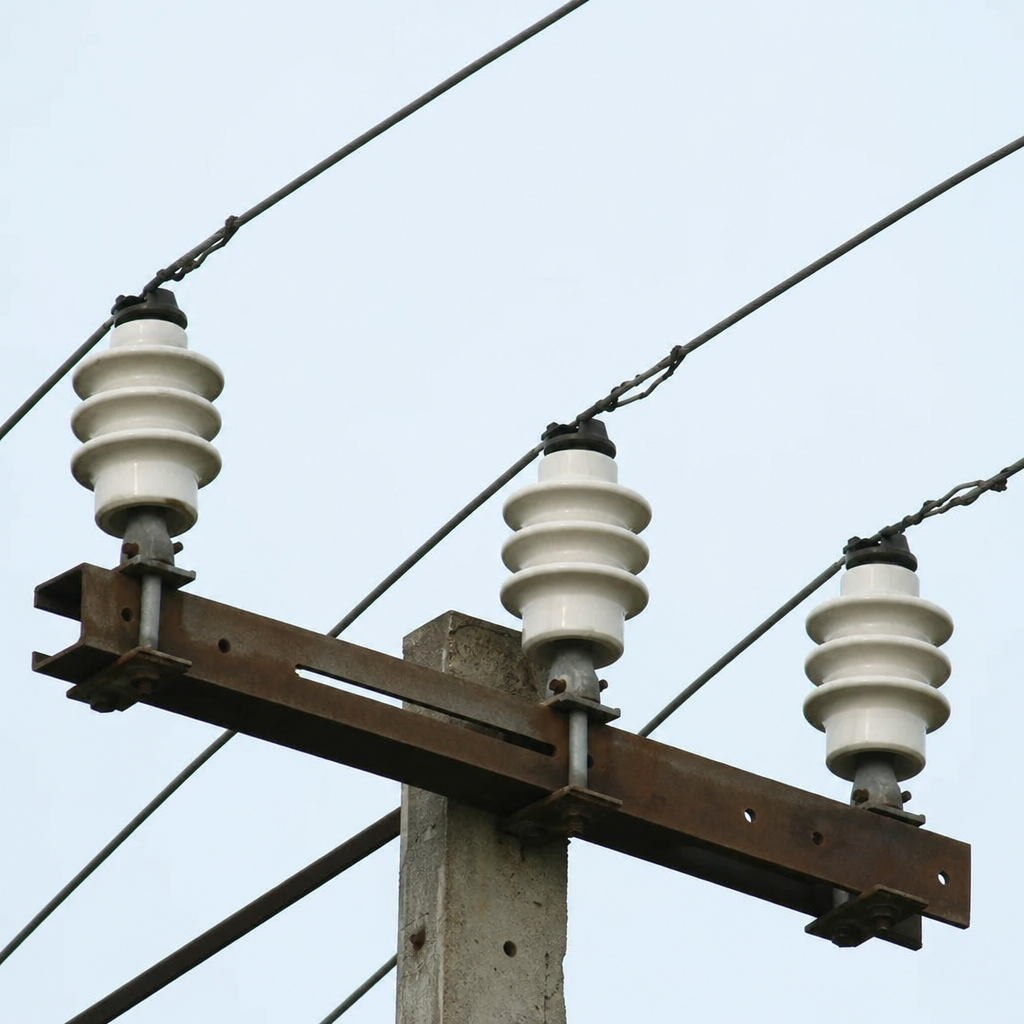
How Ceramic Insulators Support Safe Power Transmission
Power transmission and distribution systems need controlled separation between energized conductors and supporting structures. The higher the voltage, the more important this separation becomes.
Ceramic insulators on power lines support safe operation in three ways.
First, ceramic insulators resist current flow through the insulator body. Ceramic is a non-conductive material, which makes it suitable for electrical insulation.
Second, the shed profile of ceramic insulators increases creepage distance. Creepage distance is the surface path that leakage current would need to travel between energized and grounded parts. A longer surface path helps improve performance in wet or polluted conditions.
Third, ceramic insulators provide mechanical support. They help carry conductor weight, tension, wind load, vibration, and the stress created by line fittings.
This combination of dielectric performance, surface design, and mechanical strength is why ceramic insulators remain a trusted choice in many overhead power line applications.
Key Benefits of Ceramic Insulators on Power Lines
Ceramic insulators on power lines offer several practical benefits for electrical infrastructure. Their value comes from the combination of electrical, mechanical, and environmental performance.
Reliable Electrical Isolation
The main function of ceramic insulators is to prevent current from leaving the conductor and reaching grounded structures. Ceramic has strong dielectric properties, helping maintain safe electrical separation in overhead line systems.
Strong Mechanical Performance
Ceramic insulators on power lines must support more than electrical stress. They also need to handle conductor weight, line tension, wind, vibration, and sometimes ice loading. Properly designed ceramic insulators provide stable mechanical support in demanding applications.
Weather Resistance
Outdoor ceramic insulators are exposed to rain, humidity, sunlight, dust, pollution, and temperature changes. Ceramic materials are inorganic and generally stable under long-term outdoor exposure. The glazed surface of ceramic insulators also helps reduce water absorption and makes the surface easier to clean or inspect.
Thermal Stability
Ceramic insulators can withstand temperature changes without easily deforming. They do not soften like some organic materials under heat, and they are noncombustible. This makes ceramic insulators useful in exposed electrical environments where thermal stability matters.
Long Service Life
Ceramic insulators are widely used because they offer long service potential. When ceramic insulators are correctly specified, manufactured, transported, installed, and maintained, they can remain effective for many years.
Proven Field Performance
Ceramic insulators on power lines have a long history in transmission and distribution systems. Engineers, utilities, and contractors understand their behavior, installation requirements, and maintenance needs. This proven track record supports confidence in many power infrastructure projects.
Common Types of Ceramic Insulators on Power Lines
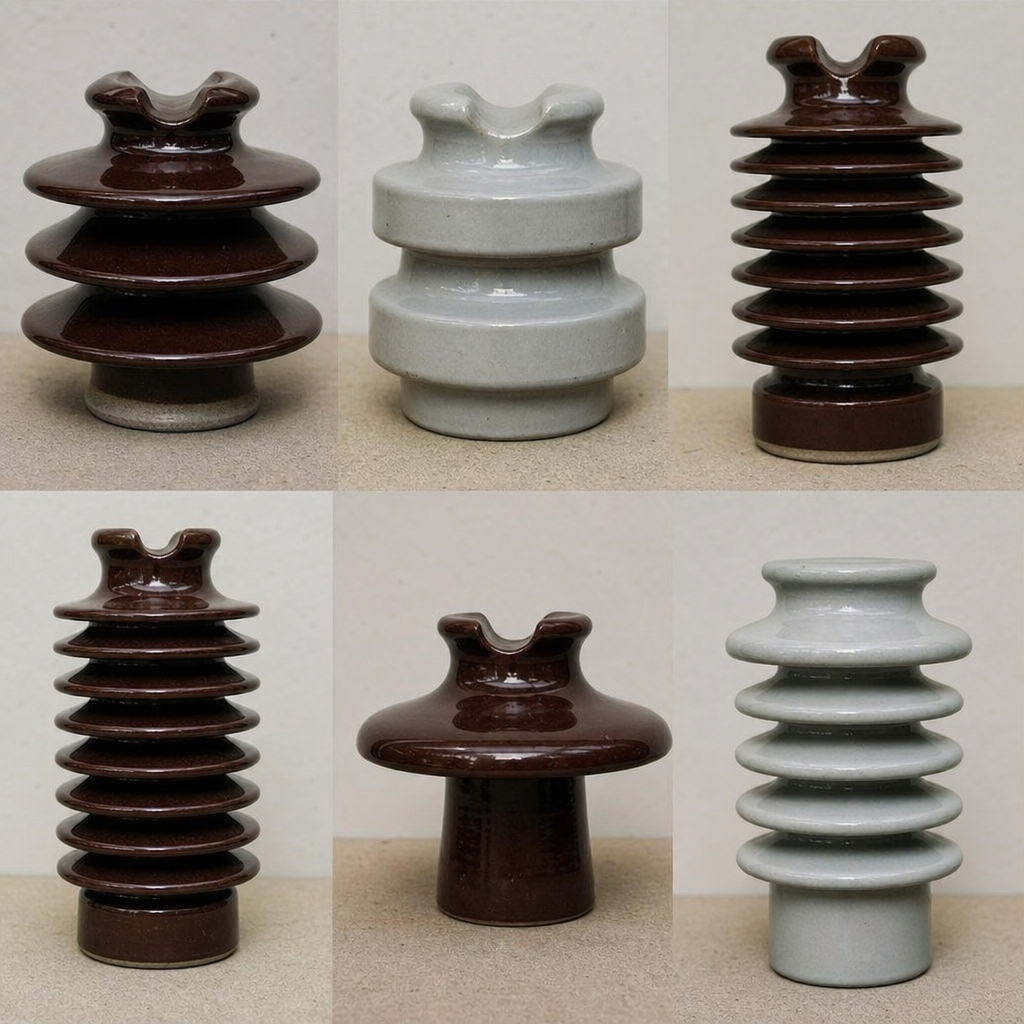
Ceramic insulators are available in several designs because different power lines have different electrical and mechanical requirements.
Pin-Type Ceramic Insulators
Pin-type ceramic insulators are commonly used on overhead distribution lines. They are mounted on a pin attached to a crossarm or pole structure, and the conductor is secured near the top. Their shed design increases creepage distance and helps maintain insulation in damp conditions.
Suspension Ceramic Insulators
Suspension ceramic insulators are often used in higher-voltage overhead lines. They are usually arranged as a string of disc insulators connected together. The conductor hangs from the lower end of the string, while the upper end attaches to the tower or supporting structure.
One advantage of suspension ceramic insulators is flexibility. The number of units in the string can be adjusted according to the required voltage level and insulation distance.
Strain Ceramic Insulators
Strain ceramic insulators are used where the conductor is under high tension, such as dead-end towers, sharp turns, long spans, or line terminations. These ceramic insulators must provide electrical insulation while withstanding strong pulling forces.
Post Ceramic Insulators
Post ceramic insulators are rigid support insulators used in certain overhead line, switchgear, and substation applications. They support conductors or buswork while maintaining electrical separation from grounded structures.
Ceramic Insulators Compared with Glass and Polymer Insulators
Ceramic insulators are one of several insulator materials used in power systems. Glass insulators and polymer insulators are also common. The best choice depends on the application, environment, maintenance approach, and project requirements.
Ceramic insulators are often selected for proven durability, strong mechanical performance, thermal stability, fire resistance, and long-term outdoor reliability. Glass insulators can offer visible failure characteristics in some designs, while polymer insulators are lighter and may perform well in certain polluted environments.
Ceramic insulators are not automatically better in every situation. However, ceramic insulators on power lines are often preferred where stable performance, familiar inspection practices, and proven service history are important.
Ceramic Insulators in Harsh Outdoor Environments
Power lines rarely operate in ideal conditions. Ceramic insulators on power lines may be exposed to salt, dust, industrial pollution, agricultural contamination, humidity, rain, fog, temperature changes, and strong sunlight.
The right ceramic insulator design helps reduce the impact of these conditions. Shed profiles increase creepage distance and help manage surface leakage. Glazed surfaces help reduce moisture absorption and contamination buildup.
In coastal, desert, industrial, or agricultural areas, contamination can collect on ceramic insulators. When dry, some deposits may not create major problems. When wet, they can become conductive and increase leakage current. To manage this risk, ceramic insulators should be selected with suitable creepage distance, shed profile, and maintenance planning.
Ceramic insulators also perform well under heat and sunlight because ceramic is inorganic and noncombustible. They do not melt, soften, or deform under normal outdoor service temperatures.
Important Specifications for Ceramic Insulators
For engineering and procurement teams, ceramic insulators should be selected by specification, not only by product name. Similar-looking ceramic insulators may have different voltage ratings, mechanical strength, creepage distance, and hardware requirements.
Important parameters include:
| Parameter | Why It Matters |
|---|---|
| Rated voltage | Matches the system voltage requirement |
| Creepage distance | Helps resist leakage in wet or polluted conditions |
| Dry arcing distance | Affects flashover performance in air |
| Mechanical strength | Supports conductor load and line tension |
| Power frequency withstand voltage | Indicates operating frequency insulation performance |
| Lightning impulse withstand voltage | Shows resistance to surge and lightning stress |
| Shed profile | Affects wet and polluted performance |
| Glaze quality | Helps reduce moisture and contamination buildup |
| Fitting type | Ensures compatibility with line hardware |
| Applicable standard | Confirms compliance and testing requirements |
These details are important when comparing ceramic insulators from different suppliers or manufacturers.
How to Choose Ceramic Insulators on Power Lines
Choosing ceramic insulators on power lines should start with actual service conditions. The product must match the voltage, mechanical load, environment, line design, and maintenance strategy.
Important selection factors include:
- System voltage: Higher voltage usually requires greater insulation distance.
- Creepage distance: Especially important in polluted, coastal, industrial, or humid environments.
- Mechanical load: Ceramic insulators must handle conductor weight, tension, wind, vibration, and hardware stress.
- Environmental exposure: Salt spray, dust, humidity, ice, heat, and ultraviolet exposure can affect performance.
- Hardware compatibility: Ceramic insulators must match fittings, pins, clamps, crossarms, and tower connections.
- Standards: Many projects require ceramic insulators to meet specific utility or international standards.
Buyers should confirm these points before placing an order, especially for transmission lines, distribution lines, substations, or replacement projects.
Installation and Maintenance of Ceramic Insulators
Even high-quality ceramic insulators can fail early if they are damaged during transport, installed incorrectly, or used outside their design limits.
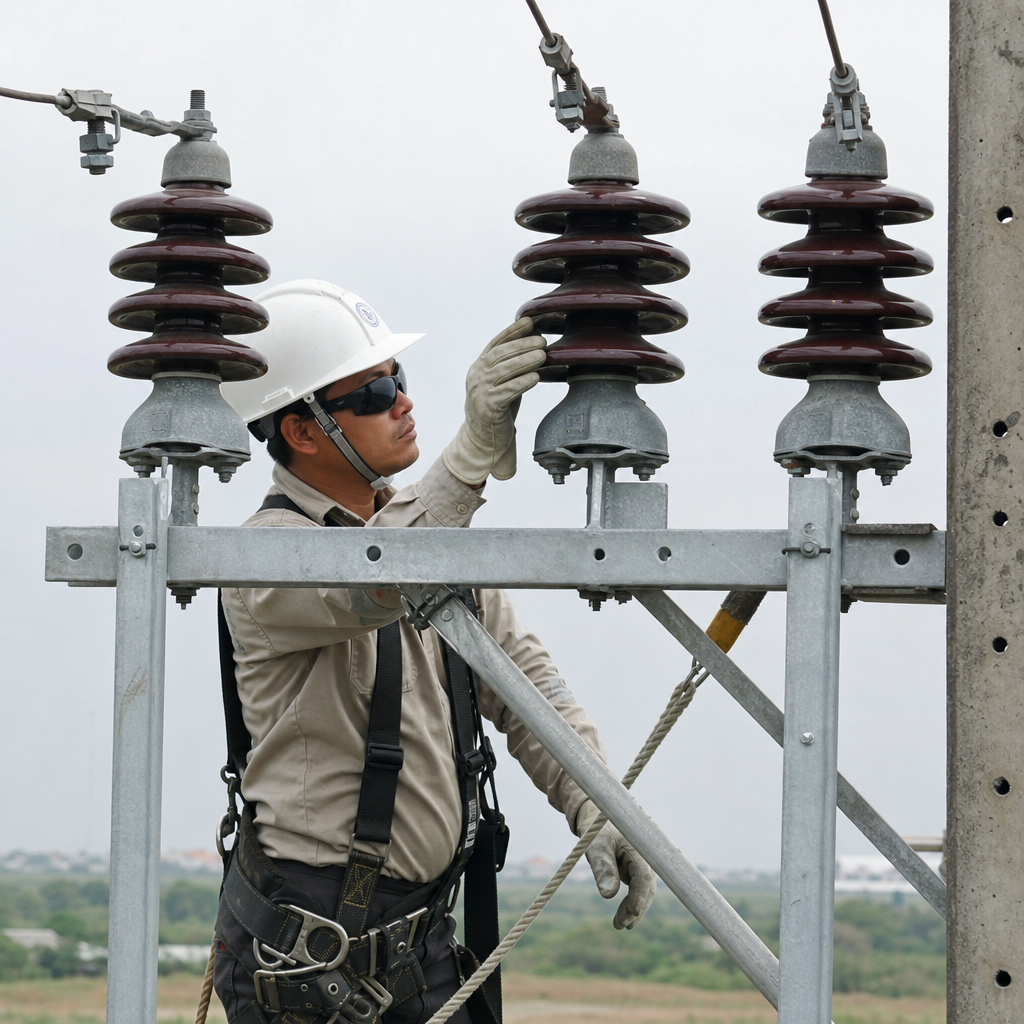
Before installation, crews should check ceramic insulators for cracks, chips, broken sheds, glaze defects, damaged fittings, contamination, or transport damage. During installation, ceramic insulators should be handled carefully to avoid hidden cracks or impact damage.
Routine inspection helps confirm whether ceramic insulators on power lines remain safe and serviceable. Common inspection points include:
- Cracked or broken ceramic bodies
- Chipped sheds
- Flashover marks
- Tracking paths
- Loose or corroded hardware
- Misalignment
- Heavy contamination buildup
- Damaged conductor attachments
- Evidence of impact or vandalism
Ceramic insulators may need replacement when they can no longer provide safe mechanical or electrical performance. Replacement signs include visible cracks, broken sheds, severe chipping, repeated flashover marks, damaged fittings, or serious hardware corrosion.
FAQ About Ceramic Insulators on Power Lines
What are ceramic insulators on power lines?
Ceramic insulators on power lines are insulating components used to separate energized conductors from poles, towers, crossarms, and grounded hardware. They also support the mechanical load of overhead conductors.
Why are ceramic insulators used on power lines?
Ceramic insulators are used on power lines because they provide reliable electrical insulation, strong mechanical support, weather resistance, heat stability, and long service life.
Are ceramic insulators still used today?
Yes. Ceramic insulators are still widely used in transmission lines, distribution lines, substations, and other electrical infrastructure because they offer proven performance and long-term durability.
What are the main types of ceramic insulators?
Common types of ceramic insulators include pin-type ceramic insulators, suspension ceramic insulators, strain ceramic insulators, and post ceramic insulators.
How do you choose ceramic insulators for power lines?
To choose ceramic insulators on power lines, check the voltage level, creepage distance, mechanical strength, environmental exposure, hardware compatibility, standards, and maintenance requirements.
Final Takeaway
Ceramic insulators on power lines play a critical role in safe and reliable power transmission and distribution. They keep electricity on its intended path, support overhead conductors, resist outdoor weather, and help reduce the risk of leakage current, flashover, and service interruption.
The lasting value of ceramic insulators comes from their combination of dielectric strength, mechanical durability, thermal stability, weather resistance, and proven field performance. However, ceramic insulators should not be selected by material name alone. The right choice depends on voltage level, creepage distance, mechanical load, environmental exposure, line hardware, and applicable standards.
For utilities, contractors, distributors, and project buyers, ceramic insulators remain a dependable option when the product design matches the actual operating conditions of the line. When properly specified, installed, and maintained, ceramic insulators on power lines provide a strong foundation for safer and more reliable electrical infrastructure.