
Different Types of Polymer Insulators Explained
Polymer insulators are modern electrical insulators used to support and separate energized conductors in overhead lines, substations, and other high-voltage applications. They are valued because they combine mechanical strength, electrical insulation, lighter weight, and strong performance in wet or polluted environments. Understanding the main polymer insulator types, materials, and design details helps engineers, utilities, and buyers specify products that fit the real operating conditions instead of relying on generic descriptions.
What are polymer insulators?
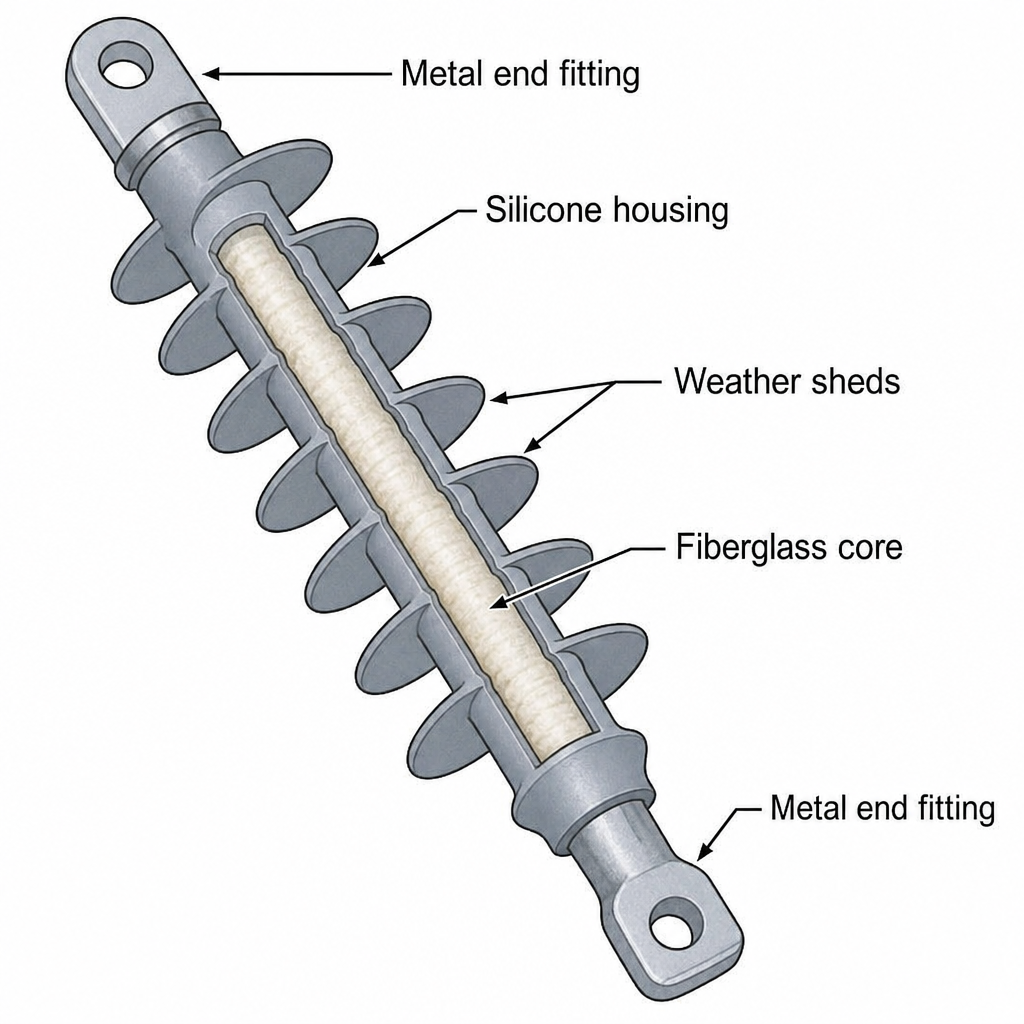
Polymer insulators are high voltage insulators made from a composite structure: a fiberglass core rod, a polymer rubber housing with weather sheds, and metal end fittings. The core carries the mechanical load, the housing protects the core and provides external insulation, and the fittings connect the unit to towers, conductors, or substation hardware.
This layered design is why polymer insulators are often called composite insulators. In many industry conversations, the two terms mean nearly the same thing. “Polymer” emphasizes the rubber housing and shed material, while “composite” emphasizes the combination of fiberglass, polymer, and metal parts working together.
Traditional glass and porcelain designs are still widely used, but polymer designs are often chosen where lower weight, easier handling, and pollution performance matter. Their hydrophobic surface helps water bead instead of forming a continuous conductive film, which can improve performance in wet, coastal, industrial, or dusty conditions.
The three main parts that define performance
A polymer insulator may look simple from the outside, but its performance depends on how well its internal and external components are engineered together. A weak core, poor rubber formulation, or badly designed fitting can limit reliability even if the finished part meets basic dimensional expectations.
Fiberglass core rod
The core rod provides tensile strength, bending resistance, and internal electrical insulation. Many designs use fiberglass reinforced resin, commonly based on E-Glass or corrosion-resistant E-Glass with epoxy, polyester, or hybrid resin systems. The choice of glass and resin affects brittleness, resistance to aging, and long-term mechanical behavior.
Core diameter is one of the most important design variables. Tension insulators may use smaller rod diameters, while cantilever applications such as line posts generally require larger rods because they must resist bending forces. A larger core is not automatically “better”; it must be matched to the required mechanical load, fitting design, and application geometry.
Polymer housing and weather sheds
The housing covers the core and protects it from moisture, contamination, ultraviolet exposure, and surface electrical stress. Silicone rubber is widely used because it maintains hydrophobicity and can recover water-repellent behavior after contamination. Formulations may include base elastomer, fillers such as ATH for arc and tracking resistance, pigments, and curing agents.
Manufacturing also matters. High-temperature vulcanized silicone rubber is often preferred for demanding outdoor service because of its durability record. Liquid silicone rubber is used in some designs and can support efficient molding, but buyers should still evaluate the supplier’s formulation, process control, and field experience.
Metal end fittings
End fittings transfer mechanical load from the conductor or structure into the core rod. They may be made from steel, ductile iron, or other suitable metals depending on the design. Common connection styles include socket, ball, clevis, tongue, and Y-clevis arrangements.
The fitting barrel and crimping process are especially important. Poor crimp control can damage the core or reduce mechanical strength. In higher-voltage applications, corona rings or corona balls may also be used to manage electric field stress near the ends of the insulator.
Common polymer insulator types
Polymer insulator types are usually grouped by function, mounting arrangement, and the mechanical load they must carry. The same basic materials may appear across several insulator types, but the shape, end fittings, core diameter, and electrical dimensions change with the application.
Suspension and tension insulators
Suspension and tension polymer insulators are used on overhead transmission and distribution lines where conductors must be supported or strained. They are designed primarily for tensile load, so the core rod and fittings carry the conductor weight, wind load, and line tension.
These insulators commonly use ball-and-socket or clevis-style hardware so they can integrate with existing line assemblies. Their section length, dry arc distance, and creepage distance are selected according to voltage level, pollution severity, and system requirements.
Line post insulators
Polymer line post insulators support conductors in a more rigid position and must resist cantilever loads. Because bending forces are central to their role, they often require larger core diameters and careful fitting design.
They are useful where utilities want the handling benefits of polymer materials while maintaining conductor spacing and line geometry. In compact line designs, the balance between mechanical deflection, electrical clearance, and shed profile becomes especially important.
Station post insulators
Station post polymer insulators are used in substations to support buswork, switches, and other energized equipment. They are exposed to mechanical forces from equipment weight, short-circuit forces, wind, and installation stresses.
For these applications, dimensional consistency and cantilever strength are critical. Electrical clearances, dry arc distance, and creepage distance must align with the site’s voltage class and environmental conditions.
Hollow core and apparatus insulators
Some composite insulators use hollow cores for equipment such as surge arresters, bushings, instrument transformers, or cable terminations. These designs are more specialized because they must coordinate with internal equipment requirements, sealing systems, and pressure or environmental exposure.
In these cases, the polymer housing is only one part of the full apparatus design. Buyers should evaluate the complete assembly rather than treating the insulator shell as a standalone component.
How do polymer insulators compare with glass and porcelain?
Polymer insulators are generally lighter, easier to handle, and better at maintaining surface hydrophobicity than glass or porcelain insulators, while glass and porcelain are valued for their long service history, rigidity, and familiar inspection practices. The best choice depends on the line design, environment, maintenance strategy, and acceptable risk profile.
Compared with traditional insulator materials, polymer designs can reduce installation effort because crews handle less weight. That can matter on remote lines, difficult terrain, or retrofit projects where lifting and transport are practical constraints. Their shed surfaces also tend to perform well in polluted or wet conditions because water does not spread as easily across a hydrophobic silicone surface.
Glass and porcelain offer different advantages. They are inorganic materials, they do not age in the same way as polymers, and their surface condition can often be assessed visually. However, they are heavier and may need more attention in heavily contaminated environments where surface leakage currents and flashover risk increase.
A practical comparison looks like this:
- Polymer and composite insulators: lightweight, hydrophobic, strong pollution performance, easier handling, dependent on formulation and manufacturing quality.
- Glass insulators: established field history, visible damage patterns, heavier than polymer designs, vulnerable to breakage from impact or vandalism.
- Porcelain insulators: robust and familiar, strong compression performance, heavier, and more demanding to transport and install.
Electrical dimensions that should not be overlooked
Electrical performance is not defined only by voltage rating. The geometry of the insulator determines how it behaves under dry, wet, and polluted conditions.
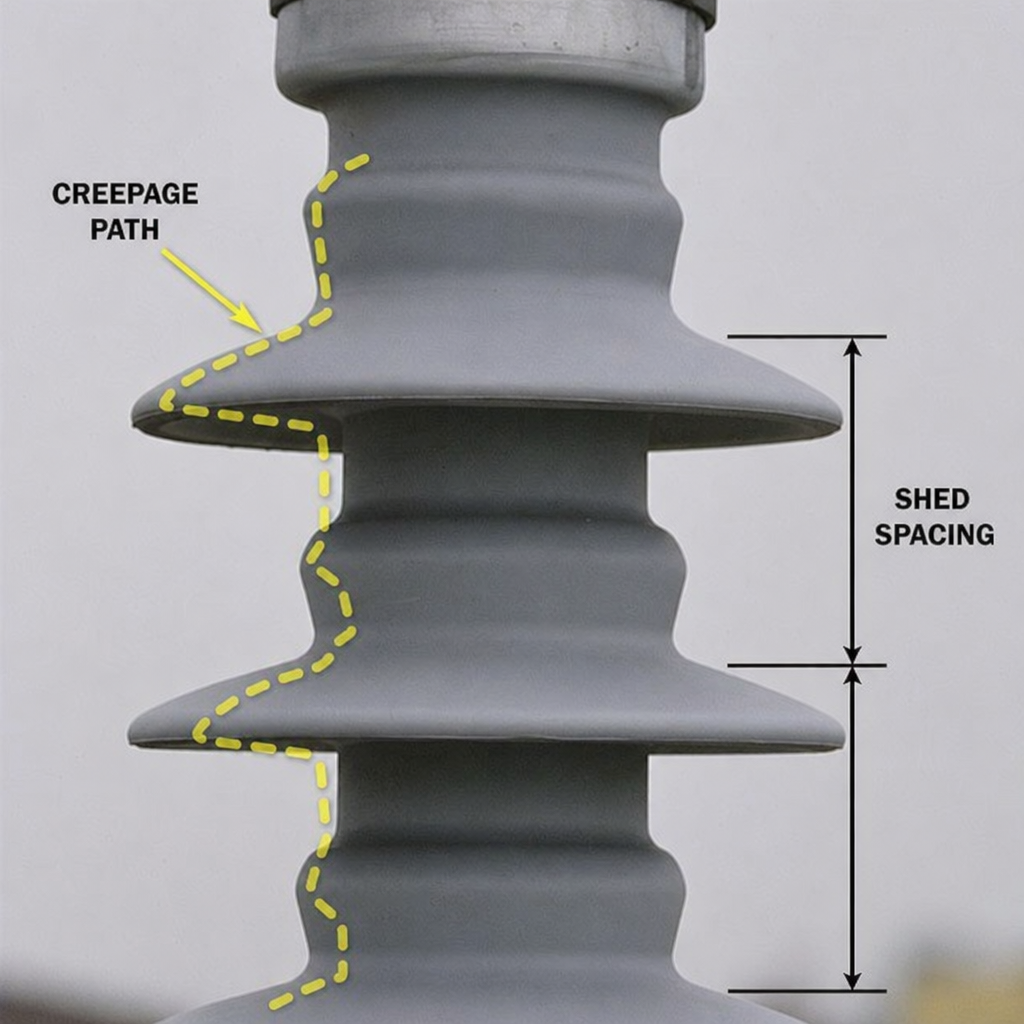
Dry arc distance is the shortest external air path between energized and grounded ends. It is closely tied to section length and influences flashover performance. Creepage distance is the distance along the insulating surface, including the path over and around sheds. Longer creepage is often required in polluted, coastal, industrial, or desert environments.
Shed profile also matters. Alternating shed sizes, spacing, and slope can influence how rain washes contamination away and how leakage currents develop. A design that works in a clean inland area may not be suitable for a salt-fog coastline or a cement-dust industrial corridor.
Which insulator materials matter most when specifying?
The most important insulator materials are the fiberglass core system, the silicone rubber housing formulation, and the metal end fitting material. These components determine mechanical capacity, aging resistance, electrical tracking behavior, corrosion resistance, and how reliably the unit performs after years outdoors.
When reviewing a polymer insulator, look beyond the catalog name. Two products may both be described as silicone composite insulators, yet differ significantly in rubber compound, core rod quality, crimping method, and traceability. Those differences can affect service life and maintenance risk.
Key checkpoints include:
- Core rod composition: Confirm the glass type, resin system, diameter, and suitability for tensile or cantilever loading.
- Housing formulation: Look for silicone rubber designed for hydrophobicity, tracking resistance, UV exposure, and thermal stability.
- Bonding and sealing: The interface between the housing, core, and fittings must prevent moisture ingress.
- End fitting design: Review metal material, connection type, barrel geometry, crimp process, and corrosion protection.
- Electrical geometry: Match dry arc distance, creepage distance, and shed profile to voltage level and pollution severity.
- Quality control: Ask about lot traceability, routine tests, design tests, and supplier approval procedures.
Standards help, but application details decide the final choice
Standards such as ANSI and IEC documents help define testing methods, terminology, dimensional expectations, and performance verification for electrical insulators. They are essential reference points, but they do not remove the need to specify the actual service environment and mechanical duty.
For example, a transmission line in a clean rural region, a substation near the ocean, and a distribution line through an industrial zone may all require different creepage distances or shed profiles. Likewise, a suspension application and a line post application place very different stresses on the core and fittings.
Before selecting high voltage insulators, clarify:
- System voltage and insulation coordination requirements.
- Tensile, bending, or compression loads.
- Pollution level, salt exposure, dust, humidity, and rainfall patterns.
- Hardware connection type and installation constraints.
- Required standards, test reports, and quality documentation.
- Maintenance access and inspection expectations.
Practical takeaways for choosing polymer insulators
Polymer insulators are not one-size-fits-all components. Their value comes from matching the right composite design to the real conditions of the line or substation.
If the priority is easier handling and strong pollution performance, polymer or composite insulators may be a strong fit. If the project requires a long-established inorganic material with familiar visual inspection practices, glass or porcelain may still be appropriate. In many modern grids, all three insulator types can coexist because each solves a different engineering problem.
The best specification starts with the application, not the product label. Define the mechanical load, voltage class, creepage requirement, environment, and connection style first. Then evaluate the core rod, silicone housing, end fittings, and quality controls to make sure the selected polymer insulator can do its job reliably in the field.