
Exploring the Manufacturing Process of 11kV Polymer Pin Insulators
Polymer pin insulators are essential components in medium-voltage distribution systems, helping support overhead conductors while maintaining electrical separation from poles and crossarms. For buyers, engineers, and procurement teams, understanding insulator manufacturing makes it easier to evaluate quality, compare polymer insulator types, and communicate clearly with an 11kv polymer pin insulator factory.
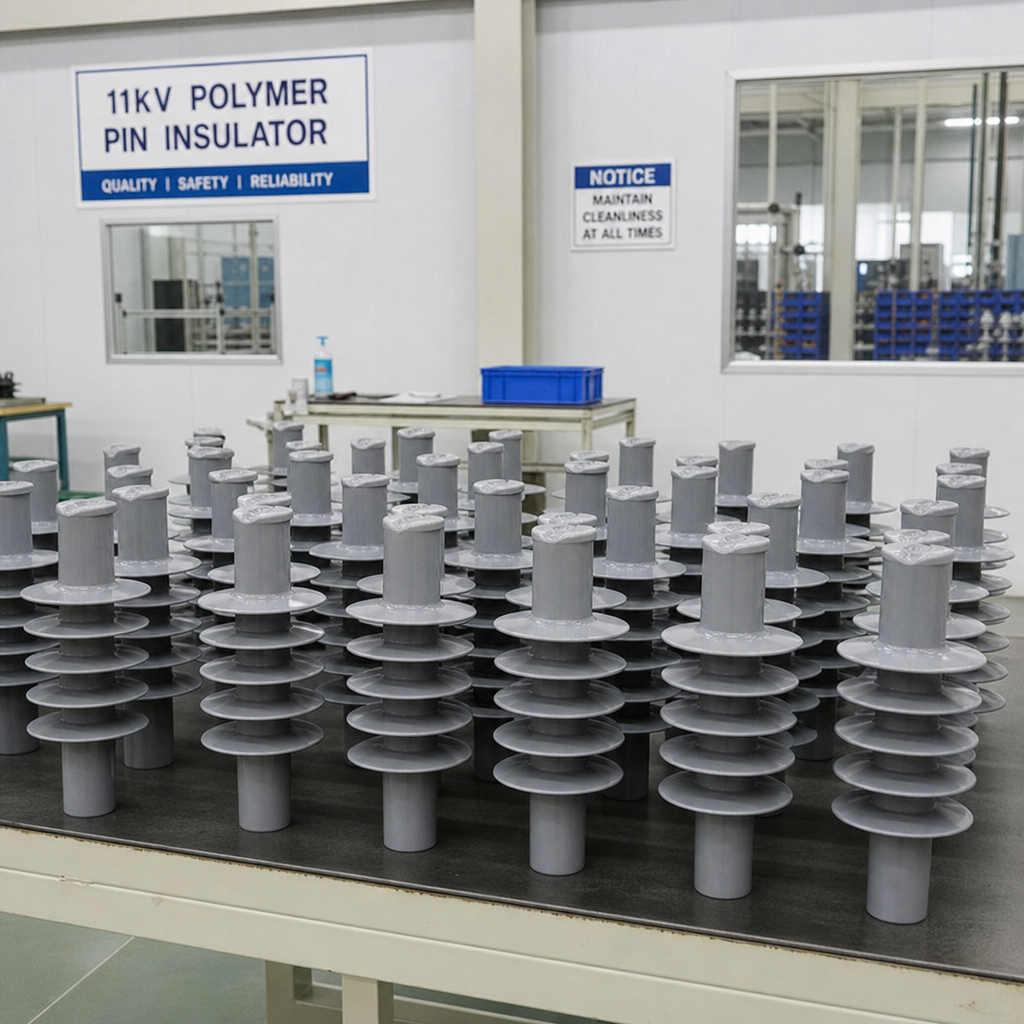
How are 11kV polymer pin insulators made?
An 11kV polymer pin insulator is typically produced through a controlled process that combines a strong internal core, metal end fittings, and an external polymer housing. Each stage matters because the finished product must resist electrical stress, mechanical load, weather exposure, and pollution on distribution lines.
The process usually begins with material preparation. The internal core is selected for strength and insulation performance, while the outer housing material is prepared to provide hydrophobicity, tracking resistance, and long-term outdoor durability. In a quality-focused electrical component factory, these materials are checked before production begins to reduce defects later in the line.
Core assembly and fitting preparation
The core forms the structural backbone of polymer pin insulators. It must be clean, dimensionally consistent, and compatible with the end fitting design. Metal fittings are prepared separately, often through machining, surface treatment, or inspection steps that help ensure proper bonding and mechanical reliability.
Once the parts are ready, the core and fittings are assembled according to the product design. This stage requires careful alignment because even small inconsistencies can affect installation, loading, and field performance. Good insulator manufacturing depends on repeatability, not just raw material quality.
Molding the polymer housing
The polymer housing is molded around the prepared core and fittings. This housing usually includes sheds, which increase creepage distance and help water run off the surface. The shape, spacing, and finish of these sheds are important for high voltage insulators used in outdoor environments.
During molding, temperature, pressure, curing time, and material flow must be controlled. Poor molding can lead to voids, weak bonding, flash, or uneven surfaces. A reliable 11kv polymer pin insulator factory will typically focus on process control at this stage because the housing protects the insulator from moisture, contamination, and electrical tracking.
Quality checks before delivery
Finished polymer pin insulators should be inspected before packaging and shipment. The exact testing plan may vary by factory, customer requirement, and applicable standard, but the goal is always the same: confirm that each batch is suitable for use in the intended distribution network.
Common inspection areas include:
- Visual appearance: checking for cracks, molding defects, surface damage, or irregular shed formation.
- Dimensional accuracy: confirming that fittings, mounting areas, and overall size match the design.
- Mechanical integrity: assessing whether the core, fittings, and housing are securely assembled.
- Electrical performance: verifying insulation behavior for medium-voltage application requirements.
- Packaging condition: protecting the finished product during storage and transportation.
What affects 11kV polymer pin insulator price factory quotes?
An 11kv polymer pin insulator price factory quote can depend on material selection, fitting design, order quantity, testing requirements, packaging, and customization. A lower price is not always better if it comes from reduced inspection, inconsistent raw materials, or weak process control.
When comparing suppliers, ask what is included in the quote. Some factories may offer standard models, while others can adjust design details for specific line conditions. Clear drawings, technical requirements, and expected quantities help the factory provide a more accurate quotation.
Practical buying considerations
Before choosing among polymer insulator types, match the product to the actual application. Consider voltage level, mechanical load, pollution exposure, climate, mounting method, and utility specifications. Polymer designs are often valued for lighter weight and good outdoor performance, but they still need proper selection and installation.
For procurement teams, the best approach is to evaluate both the product and the factory behind it. Look for consistent manufacturing controls, clear communication, suitable testing procedures, and careful packaging. In many cases, a dependable production partner is just as important as the component itself.