
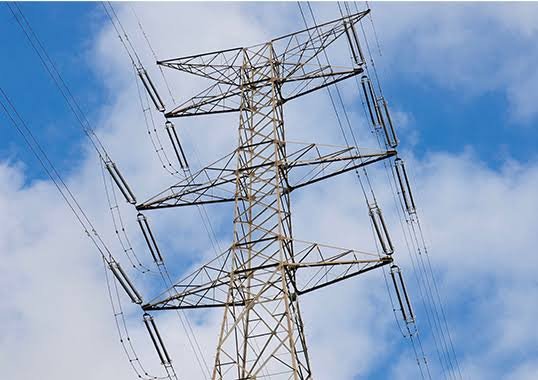
If you specify, procure, or maintain hardware on 66 kV–1000 kV overhead lines, you already know the trade-off: glass and porcelain disc strings are predictable and easy to inspect, but they punish you every time salt fog, cement dust, or industrial residue combines with humidity. Composite suspension insulators were developed for exactly that environment. This guide walks through the engineering decisions behind a modern composite long rod, what IEC 61109 and IEC 60815 really require, and how to write an RFQ that gets a usable, field-proven product instead of a catalog number.
The goal is simple: by the end of this page you should be able to defend every value on the datasheet to a senior protection engineer — and to a procurement auditor.
What Is a Composite Suspension Insulator?
A composite suspension insulator is a single-piece, non-ceramic insulator used to hang a conductor from a transmission tower. It replaces a multi-disc glass or porcelain string with one long rod that carries the same mechanical and electrical load at a fraction of the weight.
The construction is layered, and each layer is load-bearing:
- End fittings — forged steel or malleable iron clevis, ball, tongue, or socket terminations, hot-dip galvanized per ISO 1461. The end fitting transfers the mechanical load from the conductor into the core.
- FRP core rod — an E-CR or E-glass fiber-reinforced epoxy rod that carries the tensile load. Typical diameter is 18–32 mm, with a specified mechanical failing load (SML) of 70 kN to 550 kN.
- Housing (weather shed) — injection-molded silicone rubber (HTV or LSR), co-extruded or individually molded and slipped over sheds. This is the part that interfaces with pollution and weather.
- Interface — the bond between the FRP core, the silicone, and the metal end fitting. Failures almost always start at an interface, so this is where every type test focuses.
How it differs from porcelain and glass disc units
| Property | Composite (polymer) | Porcelain | Glass (tempered) |
| Weight per 100 kN SML | ~1.0 kg | ~6–9 kg | ~5–7 kg |
| Failure mode | Visual surface aging | Hidden puncture, then sudden drop | Self-shattering (visible) |
| Hydrophobicity | Yes (silicone surface) | None | None |
| Vandalism / gunshots | Resistant | Brittle | Brittle |
| Maintenance driver | Scheduled inspection + RTV if needed | Washing + puncture test | Washing + visual |
Engineer’s note: Composite and porcelain have the same duty — they isolate the conductor. The difference is how they fail. Porcelain can fail internally without visible warning. Composite degrades on the surface, where a climbing inspector or a thermal camera can see it. That single difference is why most coastal and industrial utilities now default to composite suspension strings above 66 kV.
Why Utilities Are Migrating From Glass to Composite on Polluted HV Lines
Pollution flashover is a surface insulation problem. The reference causes are well documented: salt, cement dust, coal fly ash,化肥 mist, diesel residue, and metal oxides settle on the shed surface, and when humidity rises or light rain wets the layer, leakage current finds a path and dry-band arcing follows. The insulator’s job is to keep the surface from becoming conductive in the first place.
Pollution flashover: same root cause, different surface response
On glass and porcelain, the pollution layer sits on a hydrophilic surface. Water films out, leakage current is high, and once a dry band forms, the recovery voltage is high enough to sustain an arc. On silicone rubber housing, water does not film out — it beads. The surface stays in a state of discrete droplets, leakage current drops by an order of magnitude, and the arc-extinguishing behavior of silicone is much stronger. This is the practical meaning of “hydrophobicity” in a transmission-line context.
Hydrophobicity transfer: why silicone outperforms glass under salt fog
A property unique to silicone rubber is hydrophobicity transfer. When the surface is temporarily covered by pollution, low-molecular-weight (LMW) silicone species migrate from the bulk of the housing to the pollution layer, restoring water-repellency even on a contaminated surface. This is measured with the STRI / IEC 60815 hydrophobicity classification (HC 1–HC 7) and is one of the strongest predictors of long-term pollution performance. Porcelain and glass do not have this mechanism — once the pollution layer is conductive, it stays conductive until washed.
Engineering Specifications You Must Define Before RFQ
A “composite suspension insulator, 110 kV” is not a product. It is a family of products. To get a comparable quote, lock down the following values first.
Mechanical
- Specified mechanical load (SML) — ultimate tensile load the core must withstand.
- Routine test load (RTL) — typically 50% of SML, applied to every unit in production.
- Cantilever strength — important for tension strings on angle towers.
- Torsion — for ball-and-socket fittings, usually ± 50 N·m or as specified.
Electrical
- Creepage distance — surface path between energized end fitting and ground end fitting. For site-pollution severity “very heavy,” IEC 60815-3 typically requires ≥ 43 mm/kV of highest phase-to-ground voltage.
- Arcing distance — shortest distance through air, important for switching impulse performance.
- Dry / wet power-frequency withstand voltage — kV, 1 minute.
- Lightning impulse withstand (BIL) — kV peak, 1.2/50 µs.
- Standard switching impulse withstand (BSL) — required at 300 kV and above.
Environmental
- ESDD (Equivalent Salt Deposit Density) — mg/cm², measured on site.
- NSDD (Non-Soluble Deposit Density) — mg/cm².
- Site pollution severity (SPS) class per IEC 60815 — light / medium / heavy / very heavy.
- Altitude — above 1000 m, the electrical clearances must be corrected per IEC 60060-1.
- Ambient temperature range — typically −40 °C to +55 °C.
- UV / solar radiation — relevant for desert and high-altitude service.
If you only have voltage class and SML, you are buying a catalog part, not a solution.
Material Comparison: Composite vs Porcelain vs Glass
| Parameter | Composite suspension | Porcelain long rod | Glass disc string |
| Weight (110 kV string) | ~3–5 kg | ~18–25 kg | ~20–28 kg |
| Surface behavior under pollution | Hydrophobic, self-recovering | Hydrophilic, requires washing | Hydrophilic, requires washing |
| Visual failure indicator | Surface aging, erosion, cracks | Puncture (often hidden) | Self-shattering (visible) |
| Vandalism resistance | High | Low | Low |
| Expected service life | 25–35 years (well-designed) | 30–40 years | 30–50 years |
| Maintenance frequency | Inspection only, RTV optional | Periodic washing | Periodic washing |
| Seismic / impact tolerance | High | Low | Low |
| Initial cost | Higher | Medium | Low–medium |
| Life-cycle cost (polluted zone) | Lowest | Medium | Highest (washing + outages) |
Procurement note: A washing program in a coastal area can cost USD 80–200 per tower per year, per span. Across 200 km of 110 kV line, that often pays for the composite premium in 3–5 years.
Composite Suspension vs Composite Long Rod vs Pin-Type — Which Fits Your Project?
The terms overlap, and that causes confusion in RFQs. Use this table to map your application to the right form.
| Application | Voltage class | Recommended form | Why |
| Straight-run suspension, transmission | 66 kV – 1000 kV | Composite suspension (long rod) | One-piece rod, easy string extension, low weight |
| Angle / dead-end tower | 66 kV – 500 kV | Composite long rod with twin strings | Higher tensile, redundancy |
| Distribution tangent | 11 kV – 36 kV | Composite pin-type insulator | Vertical load only, simple pole-top |
| Distribution angle | 11 kV – 36 kV | Composite suspension (horizontal) | Horizontal load + vertical |
| Substation support | 11 kV – 800 kV | Composite station post | Cantilever load, no tensile |
| Railway catenary | 25 kV | Composite railway insulator | Vibration + pollution + grease |
If the application is tangential suspension on a transmission line, the term composite suspension insulator is correct. If you need a single, very long rod above 220 kV, the term composite long rod insulator (often “long rod polymer insulator” in European usage) is the same product family at higher SML. A composite pin-type insulator is a different product, used on distribution poles.
Applicable Standards: IEC 61109, IEC 60815, IEC 60383, ANSI C29
Type test menu buyers should demand
For composite insulators, the most important reference is IEC 61109 (composite insulators for AC overhead lines > 1000 V). It defines the design tests, the type tests, and the sample tests every batch must pass. For selection on a specific site, the relevant pollution guide is IEC 60815-1 / -2 / -3. For dimensioning creepage on the actual service environment, the IEC 60815-3 flowchart (site severity → unified specific creepage distance → required profile) is the international baseline.
In North American projects, the relevant reference is ANSI C29.11 / C29.12 / C29.13 for composite line post and suspension units. Many export projects require both — IEC for international tenders, ANSI for U.S. utility review.
A serious supplier will provide:
- Design test report (once per design)
- Type test report per IEC 61109
- Sample test report per batch (tensile, visual, dimensional)
- Optional: 5000 h UV aging, 5000 h salt fog, tracking and erosion per IEC 60587
If your supplier cannot show a current IEC 61109 type test report for the exact SML class, walk away.
How to Prevent Pollution Flashover With Composite Insulators
Creepage extension and shed profile design
On glass, anti-fog and aerodynamic profiles are the only way to gain creepage. On composite, the same shed profile exists, plus you can extend creepage by alternating large and small sheds (the “alternating shed” or “big-small-big” pattern) without changing the overall string length significantly. The standard alternation ratio is roughly 2:1 in shed diameter with a typical spacing of 35–45 mm.
For very heavy or desert pollution, ask the supplier for an aerodynamic profile with extended bottom rib — it reduces dust accumulation on the upper surface, which is the surface most exposed to dry-band heating.
RTV coating vs factory-molded silicone — when each is justified
RTV (room-temperature-vulcanized) silicone coatings are applied to existing glass or porcelain strings in service. They work, but they age, erode under UV, and must be re-applied on a 5–8 year cycle. Factory-molded HTV silicone housing is a different product. For a new line, always specify factory-molded. For a retrofit on existing porcelain where the budget does not allow full replacement, RTV is a legitimate interim solution — but it is an interim solution, not a permanent one.
Installation Workflow (field checklist)
A composite long rod is not fragile, but it is more sensitive to improper handling than porcelain. The standard installation sequence is:
- Pre-lift visual — check for shed damage, oil contamination, end-fitting surface defects. Any visible damage to the housing rejects the unit.
- Ball-socket alignment — clean the socket, apply a thin film of approved grease, align the ball. Never use a hammer to seat the ball; use the correct fitting tool.
- Torque — tighten the clevis pin or U-bolt to the supplier-specified value, typically 40–70 N·m depending on fitting size. Under-torque is as bad as over-torque: the string will swing and induce bending stress on the core.
- Corona ring fitment — for 220 kV and above, fit the corona ring (grading ring) at both ends. This is non-optional. A missing corona ring on a 220 kV composite string will trip the line in dry weather within months.
- Final visual after energization (cold check) — 24 hours after first energization, perform an infrared scan. Any hot spot > 1 °C above adjacent units indicates a problem.
- As-built record — log batch number, SML, creepage, installation date, and GPS coordinates per tower.
Inspection, Monitoring, and Maintenance
Composite insulators are low-maintenance, but they are not zero-maintenance. The standard inspection cycle is:
- Annual visual — surface aging, cracks, oil contamination, animal damage, missing corona rings.
- Infrared thermography — every 2 years, on a sample basis. Look for thermal anomalies across the string.
- Leakage current monitoring — optional but recommended on critical 220 kV+ lines in very heavy pollution zones. Wireless sensors clamped on the grounded end fitting.
- Hydrophobicity class (HC) check — every 4–6 years per IEC 60815-3, using a water-spray test. If HC drops below HC 5, plan for RTV or replacement.
For an OEM buyer receiving multiple batches, the standard is to mandate a hydrophobicity test on every shipment, not just on the type test. Silicone formulations vary; the cheap HTV compounds lose HC 1 status within 2 years. Quality control at receipt is non-negotiable.
Common Failures and How to Avoid Them
| Failure mode | Root cause | Prevention |
| Brittle fracture of FRP core | Acid attack on E-glass under stress | Specify E-CR glass + corrosion-resistant end fitting; avoid HCl / coastal- industrial overlap |
| Tracking and erosion on housing | Poor silicone formulation, undersized creepage | Demand IEC 60587 1000 h tracking test report |
| Puncture / flashunder | Design creepage too low for SPS class | Use IEC 60815-3 selection flowchart, do not undersize |
| End fitting pull-out | Poor crimping or interface moisture ingress | Specify dual-seal interface; require axial load test report |
| Corona / RI on 220 kV+ | Missing grading ring | Make corona ring a contractual deliverable, not an option |
| Animal / bird damage | Insulator on substation post | Specify larger top shed or animal guards |
RFQ / Buyer Checklist
A workable RFQ for a 110 kV composite suspension insulator should include:
- Highest system voltage, BIL, BSL
- SML class (70 / 120 / 160 / 210 / 300 / 400 / 550 kN)
- Required creepage distance (mm) or specific creepage (mm/kV)
- Site pollution severity class (per IEC 60815) or ESDD/NSDD data
- Altitude, ambient temperature range, UV class
- End fitting type (ball-socket, tongue-clevis, etc.) and standard
- String length / arcing distance constraint
- Corona ring requirement (yes/no, position)
- Applicable standard (IEC 61109, ANSI C29.11/12/13, or both)
- Documentation required: design test, type test, sample test per batch
- Packing and marking requirements for export (wooden crate, ISPM 15)
- Quantity, project location, delivery schedule
If any of these are missing, the supplier will price for the worst case, and you will overpay — or underpay and get the wrong product.
Cost & Lifecycle Comparison
A 110 kV composite suspension string with 70 kN SML typically costs USD 35–90 per unit depending on creepage class, fittings, and corona ring. A comparable porcelain string is USD 25–50. A glass disc string with 7 standard units is USD 18–35.
The capex gap narrows once you add fittings, corona rings, and installation labor — composite is about 1.3–1.8× the price of a glass string on the same tower.
The opex story is reversed. A washed glass string in a coastal utility costs roughly USD 12–20 per string per year in washing, plus 0.5–1% annual replacement due to spontaneous shattering. A composite string costs essentially nothing in washing, and 25-year failure rates are in the 0.1–0.3% range for a properly designed unit. Across a 200 km 110 kV line (~600 towers), the 30-year net present value favors composite by USD 1.5–3 million, depending on the discount rate.
This is the number to put in front of a procurement committee, not the unit price.
FAQs
Q1. What is a composite suspension insulator and where is it used? A composite suspension insulator is a single-piece polymeric insulator with an FRP core and silicone rubber housing, used to suspend conductors on overhead transmission lines from 66 kV to 1000 kV. It is the standard choice for coastal, industrial, and desert lines where pollution flashover risk is high.
Q2. How does a composite suspension insulator prevent pollution flashover? The silicone rubber housing is hydrophobic. Water beads instead of filming, leakage current drops, and the surface self-recovers through low-molecular-weight silicone migration. This suppresses the dry-band arcing that causes flashover on glass or porcelain.
Q3. What is the difference between a composite suspension insulator and a composite long rod insulator? They are the same product family. “Suspension” describes the application (hanging a conductor on a tangent tower). “Long rod” describes the construction (one continuous rod instead of multiple discs). At higher voltage and SML classes, the term “composite long rod polymer insulator” is common in European and IEC usage.
Q4. What is the difference between a composite pin-type insulator and a composite suspension insulator? A composite pin-type insulator is used on distribution poles (11 kV–36 kV) in a vertical position, carrying bending and compressive load only. A composite suspension insulator is used on transmission towers (66 kV and above) hanging the conductor under tensile load. They share materials but have very different mechanical designs.
Q5. Which IEC standards apply to composite suspension insulators? IEC 61109 covers composite insulators for AC overhead lines above 1000 V (type and design tests). IEC 60815-1/-2/-3 covers site pollution severity and unified specific creepage distance selection. IEC 60383 covers insulator dimensions. ANSI C29.11 / C29.12 / C29.13 cover the equivalent tests for the U.S. market.
Q6. How much creepage distance do I need on a 110 kV composite insulator in a coastal area? For site pollution severity “very heavy” (typical coastal line), IEC 60815-3 recommends a unified specific creepage distance (USCD) of at least 43 mm/kV of highest phase-to-ground voltage. For a 110 kV system (123 kV highest), that is roughly 5,300 mm total creepage on the string, or about 48 mm/kV system voltage. Confirm with the actual ESDD measurement.