
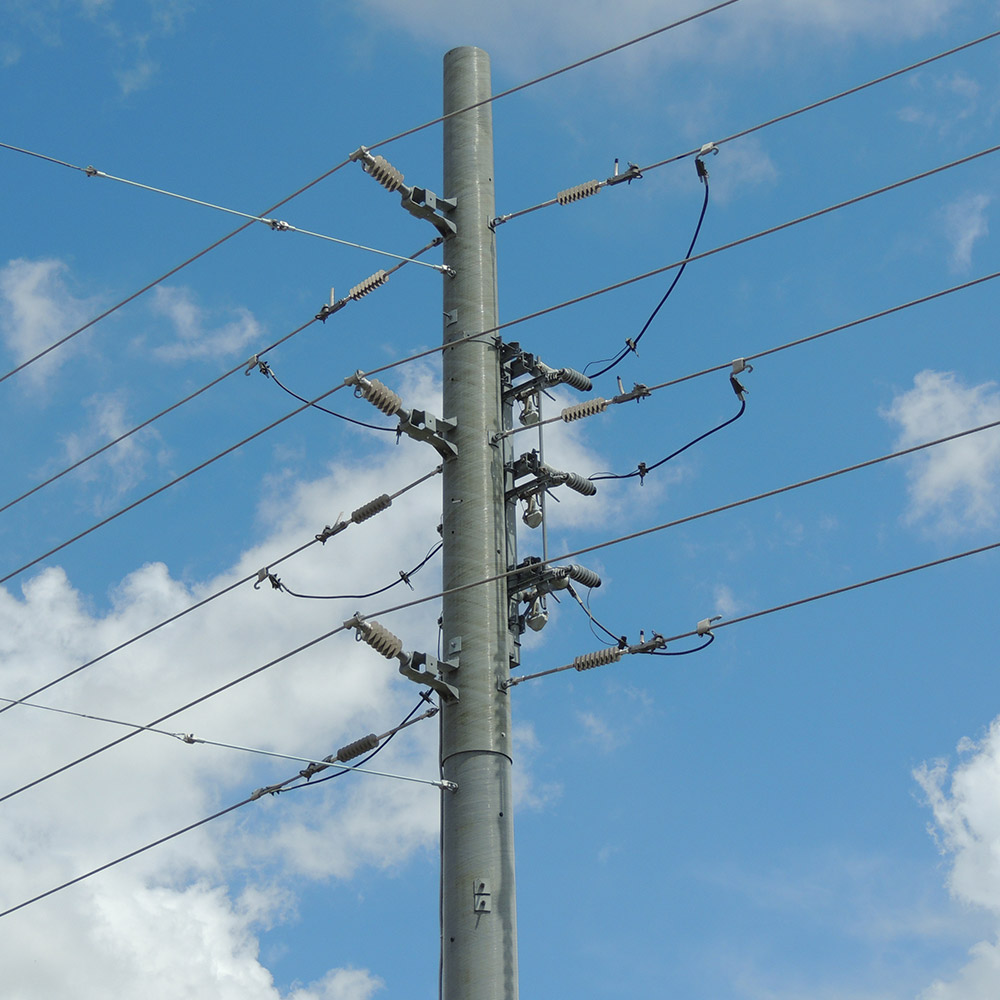
Transmission line post insulators are used in overhead power lines where conductors need reliable electrical insulation and mechanical support. For utilities, EPC contractors, grid operators, distributors, and power equipment buyers, the practical question is not only “What voltage class do we need?” It is “Which line post insulator can match the conductor load, pole or tower structure, pollution level, creepage distance, mounting interface, and long-term maintenance plan?”
In transmission and sub-transmission projects, post insulators may be selected for compact line design, conductor support, phase spacing control, and special structure arrangements. However, they should not be chosen by product name or price alone. A transmission line post insulator with the right voltage rating may still be unsuitable if the bending load, base design, shed profile, arcing distance, or connection dimensions do not match the line design.
A practical sourcing decision should start with the application, then move to electrical design, mechanical load, environmental condition, standard compliance, supplier quality control, and RFQ confirmation.
Quick Answer: When Should You Use Transmission Line Post Insulators?
Transmission line post insulators are often used when the project needs conductor support on poles, compact overhead line arrangements, reduced right-of-way, specific phase spacing, or a structure that cannot use a conventional suspension string easily.
Composite transmission line post insulators are often attractive when lighter weight, easier installation, pollution performance, and flexible design are important. Porcelain line post insulators may still be preferred where the utility specification is based on ceramic insulators, where existing structures already use porcelain designs, or where the buyer wants a traditional material with long service history.
The best option depends on line geometry, voltage level, mechanical load, environment, and maintenance strategy.
| Project Condition | Option to Evaluate First | Key Buying Check |
|---|---|---|
| Compact transmission line design | Composite line post insulator | Bending load, arcing distance, coupling dimensions |
| Coastal or industrial pollution | Composite or special-profile post insulator | Creepage distance, shed profile, hydrophobicity |
| Existing porcelain replacement | Porcelain or equivalent composite | Height, base, bolt pattern, mechanical rating |
| Lightweight installation required | Composite transmission line post insulator | FRP core, end fittings, mounting interface |
| Utility standard based on ceramic products | Porcelain line post insulator | IEC/ANSI requirement, dimensions, routine tests |
Why Transmission Line Post Insulators Matter
A transmission line post insulator supports energized conductors while maintaining insulation from poles, towers, crossarms, or grounded structures. Unlike suspension insulators, which mainly hang conductors, line post insulators are often exposed to bending, cantilever, and combined mechanical loads.
This makes selection more complex. Buyers need to confirm not only voltage class and creepage distance, but also mechanical strength, mounting direction, conductor position, hardware interface, and environmental exposure.
A mismatch can create serious project problems. Incorrect bolt spacing may stop installation. Insufficient bending strength can increase mechanical risk. Poor shed design may increase pollution flashover risk. Wrong arcing distance may affect electrical clearance.
Composite vs Porcelain Transmission Line Post Insulators
The material decision should be based on the actual line condition.
Composite transmission line post insulators usually include an FRP core, silicone rubber housing, weather sheds, and metal end fittings. They are lighter than porcelain designs and can be useful in areas where installation weight, transport, pollution performance, or custom design flexibility matters.
Porcelain transmission line post insulators are ceramic products with long application history. They may be preferred for existing line standards, replacement projects, or utilities that already have established porcelain maintenance routines.
| Comparison Point | Composite Line Post Insulator | Porcelain Line Post Insulator |
|---|---|---|
| Weight | Lighter | Heavier |
| Housing material | Silicone rubber or polymer housing | Ceramic porcelain |
| Mechanical design | FRP core with fittings | Solid ceramic body |
| Pollution behavior | Strong option when properly designed | Depends on profile and washing plan |
| Customization | Flexible for height and fittings | More tooling-dependent |
| Replacement use | Must verify all interfaces | Often easier in porcelain-based systems |
Neither material is always better. The correct choice depends on voltage class, conductor load, pollution level, structure design, and utility acceptance.
Standards Buyers Should Know
For composite line post insulators, IEC 61952 is an important reference. IEC 61952-1:2019 applies to composite line post insulators for AC overhead lines above 1,000 V and also covers similar designs used in substations or electric traction lines. Its purpose includes defining coupling dimensions to support assembly and interchangeability where practical.
For ceramic line post insulators, IEC 60720 covers characteristics of line post insulators with ceramic insulating parts for AC overhead lines above 1,000 V.
For polluted environments, buyers often need to review pollution severity and creepage requirements according to project specifications and relevant insulation coordination practices. The supplier should not simply quote a product without understanding the operating environment.
Common Applications of Transmission Line Post Insulators
Transmission line post insulators may be used in several project conditions.
Compact Overhead Lines
In compact lines, line post insulators help support conductors while controlling phase spacing and structure dimensions. Buyers should confirm bending load, conductor position, arcing distance, and hardware compatibility.
Pole-Mounted Transmission Structures
For steel, concrete, or wooden pole structures, post insulators may support conductors on crossarms or brackets. The base design, bolt spacing, mounting angle, and mechanical load should match the pole hardware.
Polluted or Coastal Transmission Routes
In coastal, industrial, dusty, or humid areas, creepage distance and shed design become especially important. Composite line post insulators may be evaluated early because silicone rubber housing can help in polluted environments when properly designed.
Replacement Projects
Replacing old line post insulators requires careful dimension checking. Buyers should confirm height, base dimensions, bolt holes, top fitting, conductor clamp, mechanical rating, and clearance before ordering.
Conclusion
Transmission line post insulators should be selected according to real overhead line requirements. The right product must match voltage class, creepage distance, bending load, arcing distance, conductor support design, base dimensions, environmental conditions, and applicable standards.
For utilities, EPC contractors, distributors, and maintenance teams, the most useful supplier is one that can support drawing review, technical confirmation, quality control, testing documentation, and export packaging. A clear RFQ with drawings, dimensions, mechanical requirements, application details, and delivery expectations can reduce risk and improve procurement efficiency.
FAQs
Q1: What are transmission line post insulators used for?
They are used to support conductors on overhead transmission or sub-transmission structures while providing electrical insulation from grounded poles, towers, or crossarms.
Q2: Are transmission line post insulators different from distribution line post insulators?
Yes. Transmission applications usually require higher voltage ratings, larger creepage distance, stronger mechanical performance, and more careful clearance review.
Q3: Are composite line post insulators better than porcelain line post insulators?
Composite types are often lighter and suitable for polluted or installation-sensitive projects. Porcelain types may be preferred for legacy standards or existing ceramic-based systems.
Q4: What standard applies to composite transmission line post insulators?
IEC 61952 is commonly referenced for composite line post insulators used on AC overhead lines above 1,000 V.
Q5: What information should I send to a supplier?
Send voltage class, creepage distance, bending load, height, base drawing, bolt hole pattern, top fitting, application, quantity, standard requirement, packing requirement, and delivery schedule.