
Introduction
The polymer line post insulator has become a standard component in modern overhead power distribution systems. Combining lightweight construction, superior hydrophobic surface properties, and robust mechanical performance, these insulators deliver reliability and lower lifecycle cost in many service environments. This article is an in-depth, practical guide for engineers, procurement specialists, and asset managers who evaluate, specify, or maintain polymer line post insulator solutions. We cover materials, design variants, electrical and mechanical performance, standards and testing, installation and maintenance practices, procurement tips, field performance metrics, and frequently asked questions.
What Is a Polymer Line Post Insulator?
A polymer line post insulator is a line support insulator used on poles, crossarms or substation structures to support conductors while providing the required electrical insulation between the energized conductor and supporting structure. Unlike traditional porcelain or glass posts, polymer line posts use a fiberglass-reinforced polymer (FRP) core and a polymeric housing—typically formulated silicone—to provide a combination of mechanical strength and contamination-resistant surface properties. The polymeric housing is often described in product literature as a silicone rubber composite insulator due to the silicone skirted housing over an FRP rod.
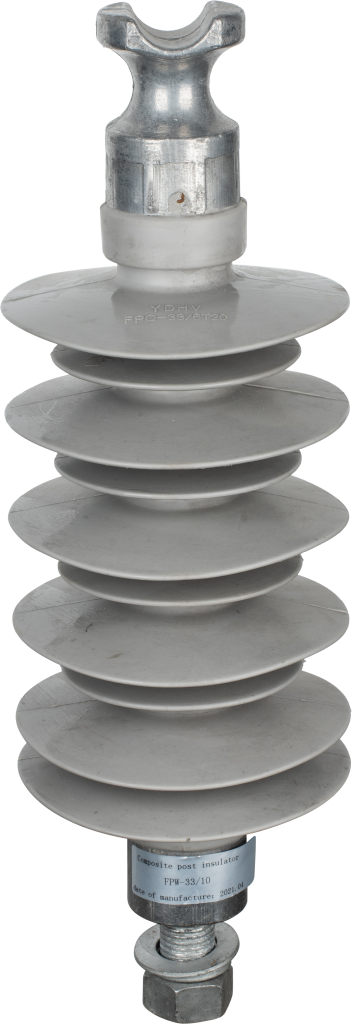
Core Components and Materials
FRP Core and End Fittings
The structural backbone of a polymer line post insulator is the FRP core. It provides tensile, compressive, and bending strength necessary to support conductors and withstand wind and mechanical loading. End fittings—made from galvanized steel or stainless steel—transfer mechanical loads into the supporting structure and must be specified for corrosion resistance.
Insulator Silicone Rubber Housing
The external housing is typically an insulator silicone rubber compound selected for hydrophobicity, UV resistance, and low electrical loss. High-quality silicone compounds maintain surface hydrophobicity over long periods and resist tracking and erosion, key properties for reducing leakage currents under polluted conditions.
Bonding, Seals and Accessories
Long-term performance depends on durable bonding between the silicone housing and the FRP core. Primers, controlled molding, or adhesive processes are used to ensure adhesion. Seals and spigots at end fittings may be protected or sealed with approved RTV sealants during installation; however, proper factory bonding and design reduce the need for field sealing.
Design Variants and Applications
Standard Line Posts
Standard polymer line posts support lateral conductors on distribution poles and crossarms. They are optimized for mechanical loadings typical of radial distribution networks and provide adequate creepage distance and shed geometry for the expected pollution class.
Heavy-Duty and Live-Line Versions
For higher mechanical demands—heavy spans, live-line work, or frequent vibration—manufacturers offer heavy-duty variants with thicker FRP cores and reinforced end fittings. Live-line rated versions add mechanical features to permit energized maintenance while preserving insulation performance.
Relation to Composite Polymer Insulator Family
A composite polymer insulator is a broader term that includes pin, post, suspension, and strain insulators made from polymeric housings and FRP cores. When selecting a polymer line post insulator, understand how it fits within your broader insulator family to ensure consistent procurement, maintenance, and spare-part strategies.
Electrical Performance and Insulation Considerations
Creepage Distance and Shed Geometry
Creepage distance is the primary control on pollution performance. The number and profile of sheds (skirts) set the available creepage distance for a given physical length. Because silicone housing is hydrophobic, it prevents continuous conductive films and thus improves performance even when physical creepage is comparable to ceramic designs.
Voltage Withstand and Coordination
Type tests for a polymer line post insulator typically include power-frequency and lightning-impulse withstand tests. Ensure the insulator selection aligns with network insulation coordination—impulse withstand voltages, power-frequency withstand levels, and switching surge considerations—appropriate for your system.
Tracking and Erosion Resistance
Silicone compounds chosen for insulator housings should demonstrate excellent resistance to tracking and erosion under salt-fog, industrial pollution, or desert sand and dust environments. Test evidence of tracking resistance and long-term aging performance should be part of any procurement dossier.
Mechanical Performance and Durability
Tensile and Bending Strength
Mechanical ratings must cover conductor tension, ice loading, wind pressures, and potential mechanical impacts. FRP cores should be specified with minimum tensile and bending strength values and validated through mechanical load-cycle testing.
Impact and Vandal Resistance
Compared to porcelain or glass, polymer housings are less brittle and more resistant to accidental impacts and vandalism. This advantage can reduce field failures and improve system availability in areas with higher physical risk.
Thermal and UV Resistance
Prolonged outdoor exposure requires silicone compounds with proven UV and thermal stability. Manufacturers often provide accelerated aging test results to demonstrate retention of mechanical and electrical properties through years of service.
Standards, Type Testing, and Quality Assurance
Adopt internationally recognized standards (IEC or ANSI/IEEE equivalents) in specifications. Required documentation should include:
- Type-test reports: impulse withstand, wet power-frequency withstand, salt-fog and tracking/erosion tests.
- Routine production tests: dimensional checks, mechanical acceptance tests, and visual inspections.
- Material certificates: FRP resin system, glass fiber type, silicone compound formulation and properties.
- Bonding tests: peel strength or pull-off tests validating housing-to-core adhesion.
Including explicit acceptance criteria for bonding strength, end-fitting galvanizing, and accelerated aging results reduces procurement risk.
Installation Best Practices
Pre-Installation Inspection
On arrival, inspect for shipping damage, straightness of FRP cores, proper marking, and conformity with mechanical dimensions. Do not install items with visible cracks or compromised housings.
Mounting and Torque Control
Follow manufacturer torque values when fastening end fittings. Over-torquing can induce stress and micro-cracking; under-torquing can create movement and fatigue failures. Use calibrated torque wrenches and follow specified sequences.
Pollution Mitigation and Orientation
Orient sheds to minimize deposition from prevailing winds and salt-spray directions. Consider increased spacing or protective shields in severe pollution zones to preserve creepage performance.
Operation, Maintenance and Field Repair
Inspection Intervals and Condition Monitoring
Set inspection intervals based on pollution severity and service history. Look for surface cuts, tracking, erosion and mechanical damage. Where feasible, use leakage-current trending to detect degradation before flashover occurs.
Cleaning and Recoating
Cleaning should be done only when necessary and using approved, non-abrasive methods to avoid removing hydrophobic layers. In certain cases, recoating with approved silicone coatings can be effective; however, systematic recoating is not a substitute for replacement when structural components are damaged.
Field Repair Options
Minor housing damage can sometimes be restored using approved silicone repair kits. For any repair, follow manufacturer instructions for surface preparation, priming and curing. Structural damage to the FRP core or end fittings requires full replacement.
Comparative Analysis — Polymer vs. Porcelain/Glass
- Weight and Handling: Polymer line post insulators are significantly lighter, reducing transportation and installation costs.
- Contamination Performance: Silicone housing retains hydrophobicity; this reduces leakage current under contaminated conditions relative to glazed porcelain.
- Mechanical Toughness: Polymer housings are less brittle and tolerate impact better than glass or porcelain.
- Long-Term Reliability: Proper materials and bonding yield comparable or superior lifecycle performance; however, procurement must focus on proven manufacturer processes to avoid early failures.
Procurement Checklist and Specification Clauses
To reduce procurement risk, include the following in technical specifications:
- Voltage class, impulse and power-frequency withstand values.
- Minimum creepage distance and shed profile tied to pollution class.
- FRP core mechanical specifications: tensile/bending strength and quality of glass fiber and resin.
- Silicone compound technical data indicating hydrophobicity retention and tracking resistance.
- Bonding strength test methods and acceptance criteria.
- End-fitting material, galvanizing thickness or stainless steel grade, and corrosion protection.
- Type-test and routine-test documentation required prior to shipment.
- Field support commitments, warranty terms, and spare-part kits.
Field Performance Metrics and Case Studies
Utilities track metrics such as cleaning frequency, leakage-current incidents, flashover events, and unplanned outages. In coastal, industrial, or desert environments, polymer line post insulator installations frequently show reduced cleaning intervals and fewer contamination-related outages. When properly specified and installed, the total cost of ownership often favors polymer solutions over time.
Frequently Asked Questions
What environments benefit most from polymer line post insulator deployment?
Polluted coastal zones, industrial corridors, and areas with frequent wetting-drying cycles benefit most due to silicone’s hydrophobic recovery and contamination resistance.
How long do polymer line posts typically last?
Service life depends on material quality and environment but well-manufactured units often deliver 20–30 years in typical conditions. Monitor field data to validate lifecycle assumptions.
Can composite polymer insulator choices be standardized across a utility?
Yes—standardizing on a composite polymer insulator family simplifies spares, training, and acceptance testing, but ensure the selected designs meet the full range of mechanical and electrical requirements across the network.
Conclusion
A well-specified polymer line post insulator delivers a compelling combination of electrical performance, mechanical resilience, and lifecycle economy—especially in polluted or environmentally challenging service areas. Emphasize high-quality silicone rubber composite insulator housings, proven FRP cores, rigorous bonding processes, and comprehensive type testing when procuring. Incorporating explicit material certificates, bonding acceptance criteria, and field-support clauses in procurement documents will protect asset reliability and help realize the full value of polymer insulator technologies.